About 4.5mm Broad Locking Plates
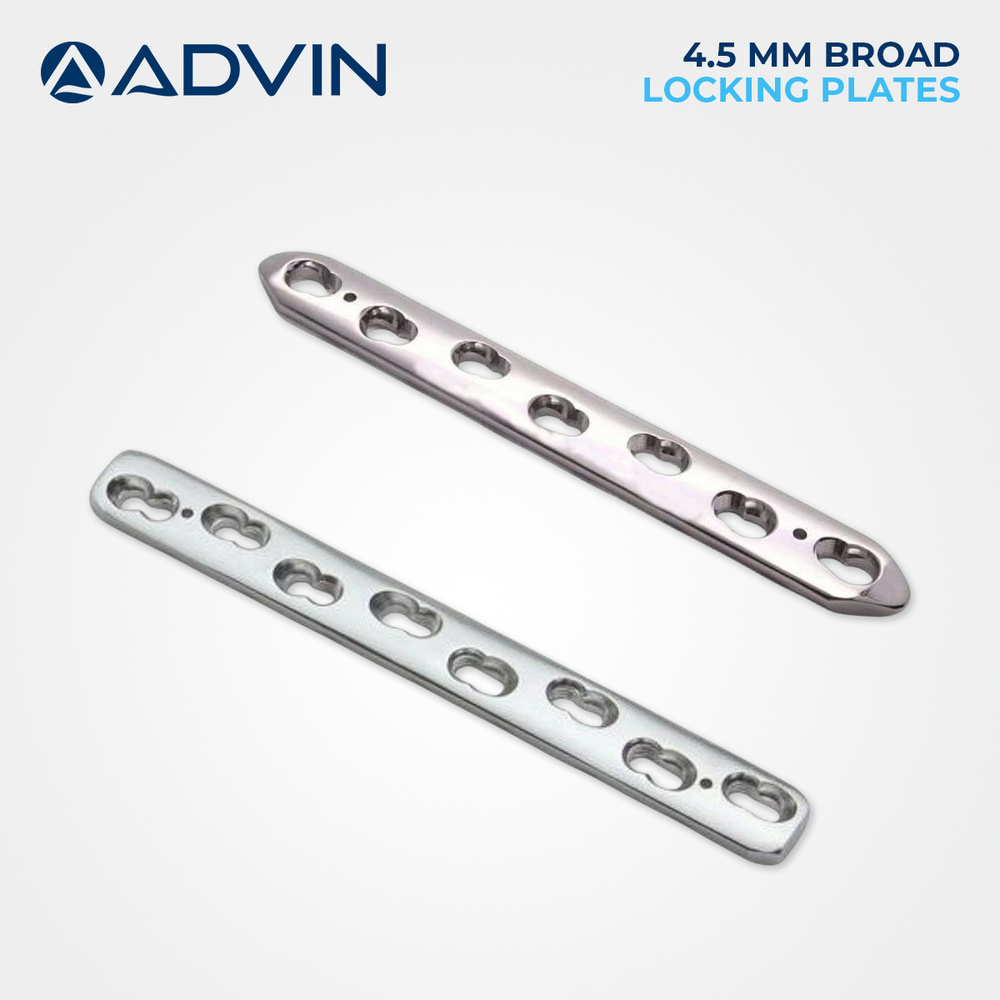
The 4.5mm Broad Locking Plate is widely used in trauma and orthopedic procedures to stabilize long bone fractures. Its broad design allows for strong fixation, making it suitable for complex fractures requiring added strength. Advin Health Care provides these plates with precise engineering and reliable material quality to ensure optimal performance in surgical procedures. This implant supports surgeons in achieving accurate fracture fixation and promotes faster recovery while reducing the risk of implant failure. It is designed for durability, strength, and effective clinical outcomes.
Advanced Features:
-
Broad design for enhanced fixation stability
-
Made from high-quality medical-grade stainless steel or titanium
-
Available in multiple sizes to suit different fracture types
-
Ensures secure fixation for reliable bone healing
-
Designed for trauma and orthopedic surgical use
Anatomical and Durable DesignEngineered for predictability and safety, the plates contoured edge minimizes irritation to soft tissue. This, combined with a rigid, corrosion-resistant construction, ensures a reliable outcome during long bone fracture stabilizations.
Versatile Screw CompatibilityThe innovative combi-holes accommodate both cortical and locking screws of 4.5mm diameter, offering flexibility for surgeons in tailoring fixation strategies, supporting optimal healing, and stability even in challenging cases.
Strict Sterile Packaging and Quality AssuranceEach plate is gamma or EO sterilized, individually sealed in blister or medical peel pouches to maintain sterility and a shelf life of up to five years. This guarantees safe surgical use and long-term storage reliability.
FAQs of 4.5mm Broad Locking Plates:
Q: How does the 4.5mm broad locking plate benefit fracture fixation in long bones?
A: The plate offers high mechanical stability and anatomical fit, helping to ensure precise realignment and stabilization of fractured shafts in long bones. Its combi-hole design allows for adaptable screw placement, which supports optimal healing and minimizes surgical complications.
Q: What type of sterilization is used for these plates, and how should they be stored?
A: The plates are sterilized using either gamma irradiation or ethylene oxide (EO) processes. They are individually packaged and should be stored in a clean, dry, sterile environment to maintain their shelf life and integrity until use.
Q: When should a surgeon choose this locking plate over other fixation devices?
A: This plate is ideal for long bone shaft fractures, such as those of the femur, tibia, or humerus, where rigid stabilization is required. Its design is particularly well-suited for cases demanding both locking and cortical screw options for bespoke fracture management.
Q: Where are these plates commonly used during surgical procedures?
A: These plates are used internally along the shafts of fractured long bones, such as the femur, tibia, or humerus. The plate is contoured to anatomical shapes and fixed to the bone using compatible screws for stabilization.
Q: What customization options are available for these plates?
A: Customization in terms of length (number of holes), material choice (stainless steel 316L or titanium alloy), and surface finish is available upon request to meet specific clinical and anatomical requirements.
Q: How is the plate installed during surgery, and what tools are needed?
A: The plate is manually positioned over the fracture and fixed using CNC-precision screws into the combi-holes with a compatible surgical screwdriver system. The process allows a choice between locking and cortical screws based on the fracture pattern.
Q: What are the primary advantages of the contoured, rounded edge profile?
A: The rounded and contoured edge design lessens the risk of soft tissue irritation, which is crucial for post-surgical comfort and healing, particularly in complex anatomical regions adjacent to the plate.

 Send Inquiry



 Send Inquiry

 Send Inquiry
 English
 Spanish
 French
 German
 Italian
 Chinese (Simplified)
 Japanese
 Korean
 Arabic
 Portuguese