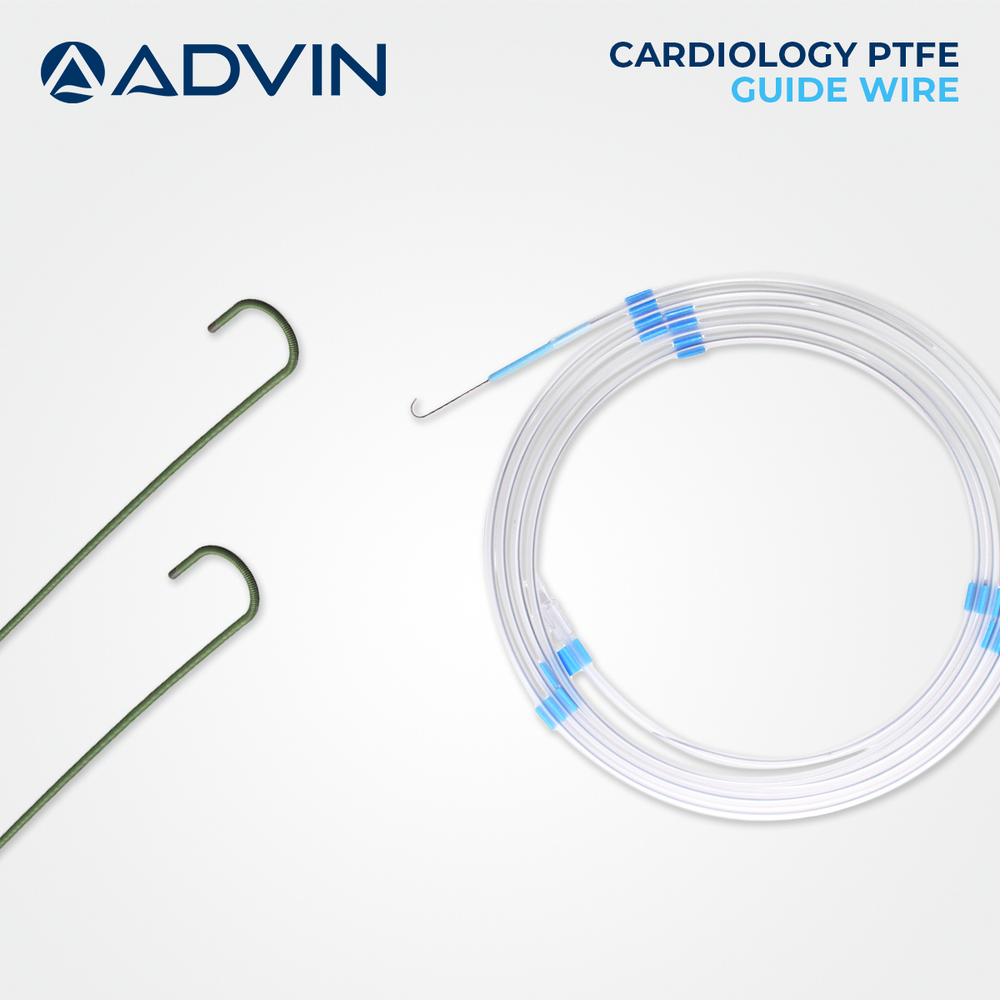
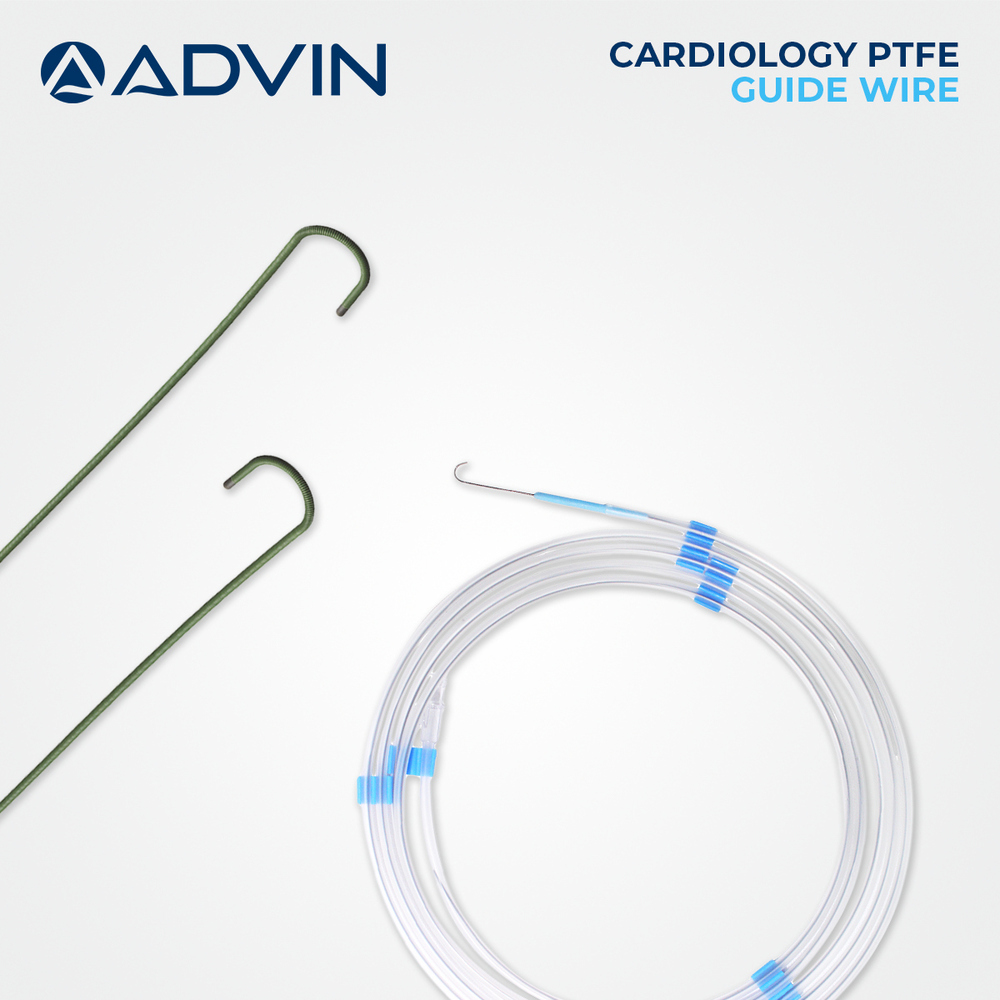
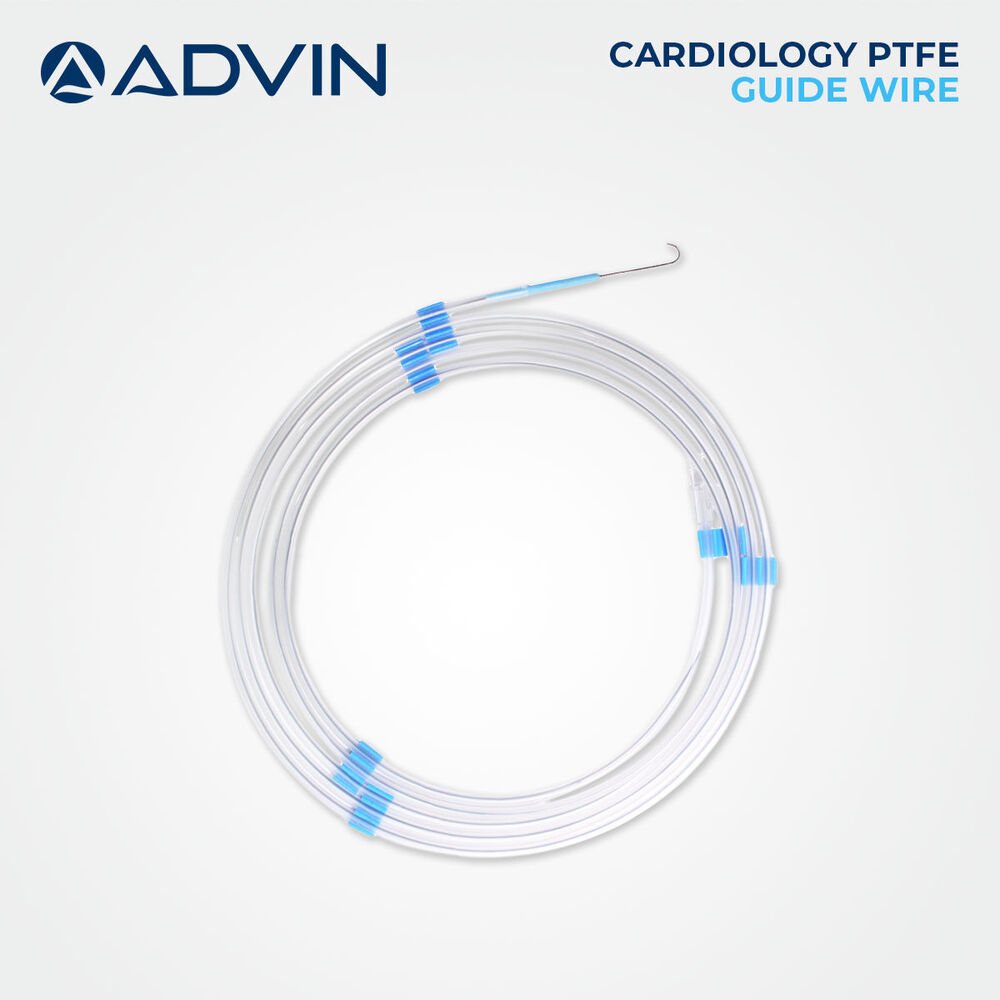
About Cardiology PTFE Guide Wire
PTFE Guide Wire are kink resistive with or without PTFE coating, galvanized stainless steel and having fixed core.
Flat wire outer coil allows for larger core and increased shaft rigidity to assist in navigating tortuous anatomy and device placement.
Smooth PTFE coating provides low coefficient of friction to facilitate advancement and catheter tracking. Tungsten-filled radiopaque tip enhances fluoroscopic visualization.
Advanced Features:
- Guide wire tip to be delivered to the desired position in a vessel
- Transmit rotational forces from the operators hand to the tip
- Advance balloon catheters/other devices on Guidewire
- Allows moving the distal tip to search for the true lumen
- Permits shape memory retention of the distal tip throughout
- better appreciated with non-coated/hydrophobic coated, coil tipped wires and it with hydrophilic coating
Product Keywords
Cardiology PTFE Guide Wire, PTFE Guidewire, Interventional Guide Wire, Vascular Navigation Wire, Coronary Guide Wire
PTFE PTFE
, , , ,
Gua de PTFE para cardiologa, gua de PTFE, gua intervencionista, gua de navegacin vascular, gua coronaria
Fil guide en PTFE pour cardiologie, fil guide en PTFE, fil guide interventionnel, fil de navigation vasculaire, fil guide coronaire
Outstanding Real-Time Performance
This guide wire stands out due to its real-time operational capability. Clinicians can make precise adjustments instantly during procedures, which is essential for delicate cardiovascular navigation. The manual operating design allows for full control, accommodating the need for flexibility and responsiveness in dynamic hospital environments.
Quality Manufacturing and Export Standards
Produced in India by reputable manufacturers, exporters, suppliers, and traders, the Cardiology PTFE Guide Wire adheres to high-quality benchmarks. Each unit is delivered in pristine, new condition, ensuring optimal performance and reliability for hospitals worldwide. Rigorous quality checks guarantee consistent standards and patient safety.
FAQs of Cardiology PTFE Guide Wire:
Q: How is the Cardiology PTFE Guide Wire used in hospital procedures?
A: The guide wire is manually operated by skilled clinicians to navigate blood vessels during various cardiology interventions. Its PTFE coating ensures smooth passage, reducing resistance and allowing accurate placement in real-time.
Q: What distinguishes this guide wire from other types in the market?
A: This model features a PTFE coating for low-friction performance and is specifically designed for real-time manual operationgiving clinicians greater immediacy and control within hospital settings. It is also portable, as it is not wall mounted.
Q: When should a hospital use this guide wire?
A: Hospitals should use the Cardiology PTFE Guide Wire during cardiovascular procedures that require precise navigation and placement within blood vessels, especially when real-time adjustments are necessary.
Q: Where is the Cardiology PTFE Guide Wire manufactured and exported from?
A: This product is manufactured, supplied, and exported by recognized medical device companies based in India, ensuring access to high-quality cardiology tools globally.
Q: What is the process for operating this PTFE guide wire?
A: A clinician manually inserts and directs the guide wire through the vascular system. The PTFE surface facilitates easy navigation while the real-time feature enables immediate adjustments based on procedural demands.
Q: What are the main benefits of choosing this guide wire for hospital use?
A: Key benefits include its smooth PTFE coating for enhanced control, manual operation for versatility, real-time responsiveness, and assurance of quality from reputable Indian manufacturers.

 Send Inquiry





 Send Inquiry

 Send Inquiry
 English
 Spanish
 French
 German
 Italian
 Chinese (Simplified)
 Japanese
 Korean
 Arabic
 Portuguese