About DHS Plate
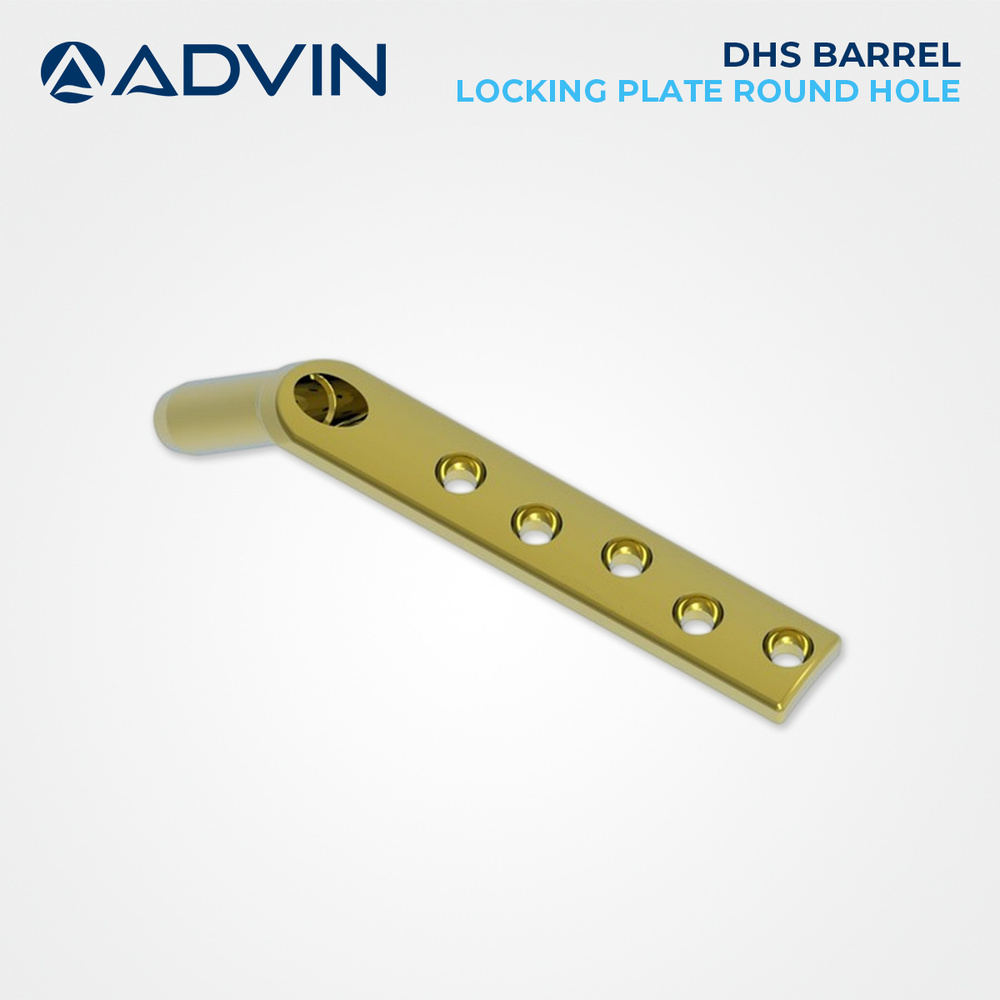
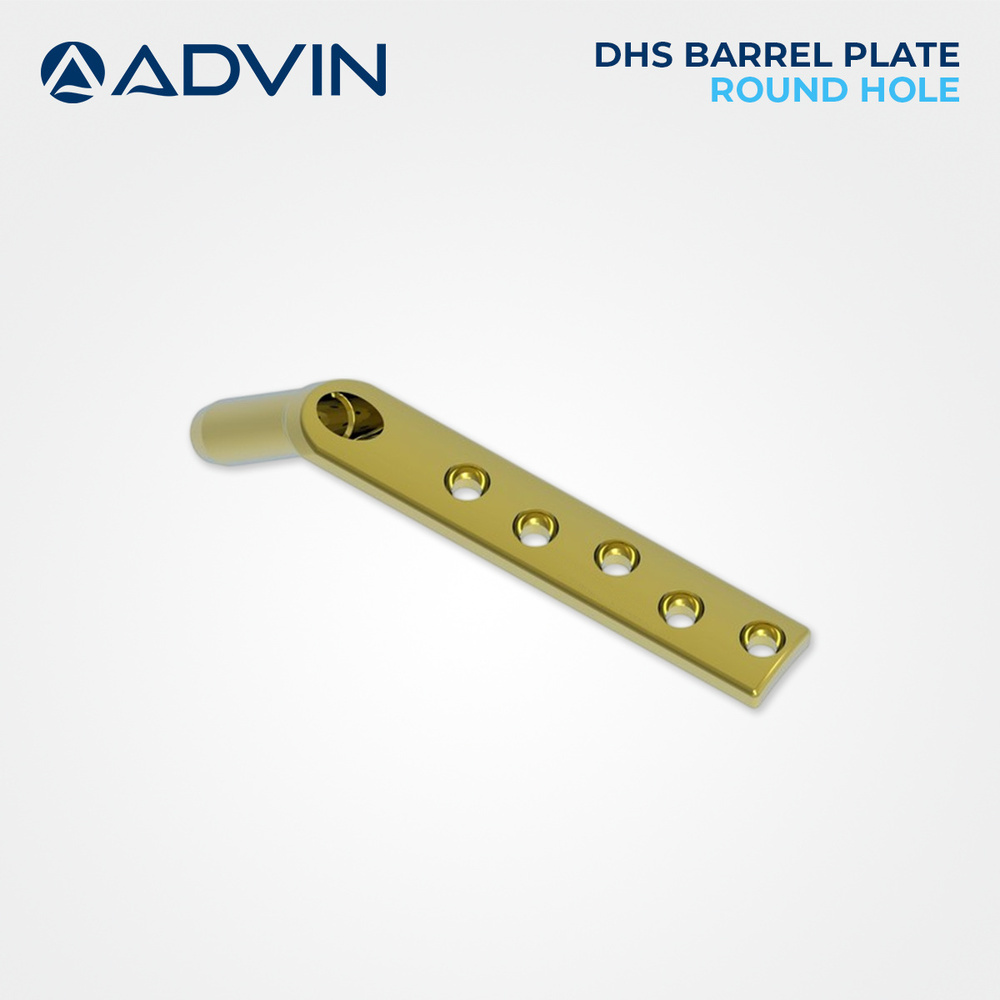
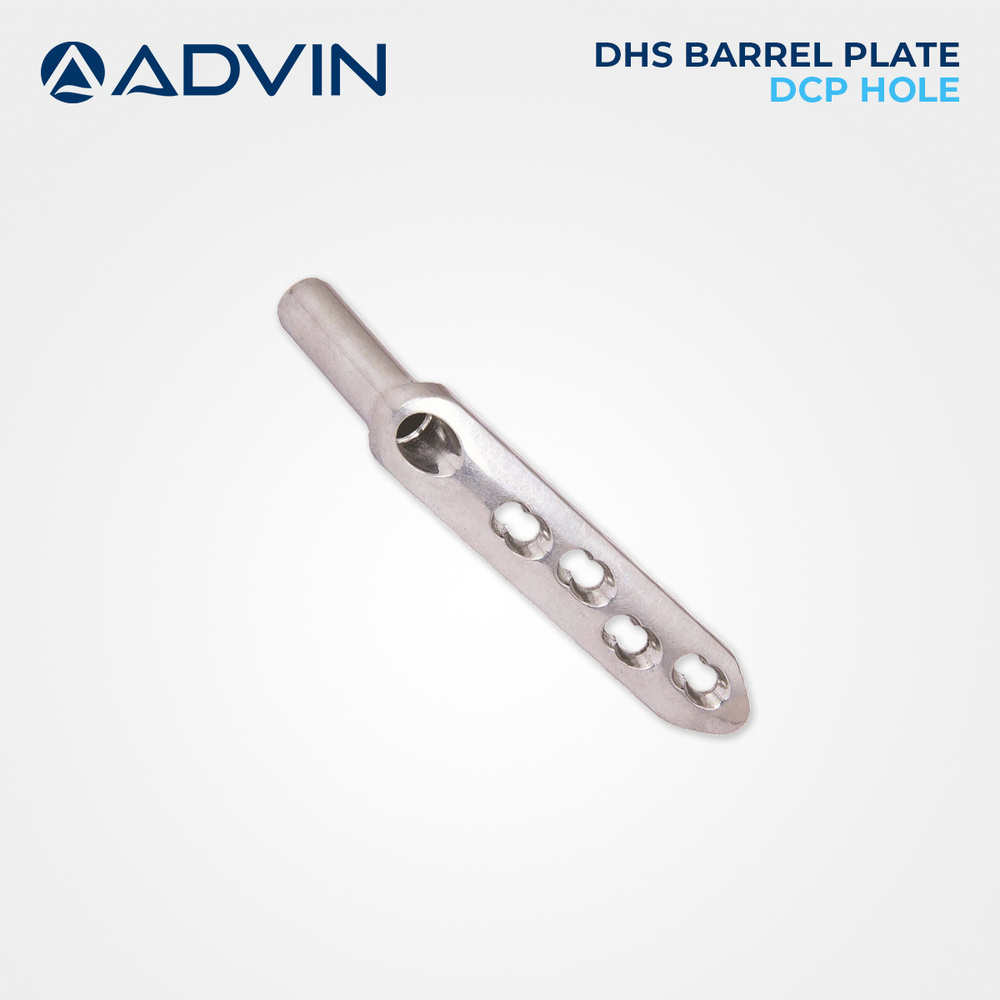
Advin Health Care provides the DHS Plate with precision engineering to ensure reliable fixation in proximal femoral fractures. Its design allows the lag screw to slide within the plate barrel, promoting controlled dynamic compression and facilitating faster fracture healing. The plate is compatible with standard cortical screws for secure fixation to the femoral shaft. It is widely used in open reduction and internal fixation (ORIF) procedures to manage intertrochanteric and subtrochanteric fractures. Its durable material and low-profile design minimize soft tissue irritation and support early patient mobilization.
Advanced Features:
-
Compatible with standard 6.5mm or 4.5mm cortical screws
-
Allows controlled dynamic compression at fracture site
-
Provides rigid fixation for intertrochanteric fractures
-
Low-profile design to reduce soft tissue irritation
-
Suitable for trauma and post-traumatic proximal femur fractures
Optimal Compatibility for Surgical RequirementsDesigned explicitly to be compatible with standard DHS screws and related orthopedic implants, this plate streamlines the fixation process in proximal femur fractures. Its screw holes with approximately 4.5 mm diameter make it suitable for various surgical configurations, allowing surgeons flexibility during hip stabilization procedures.
Superior Material and Finish for SafetyCrafted from medical-grade stainless steel (316L) or titanium, the DHS Plate boasts a cold-worked and precision-machined surface. The smooth, polished, and anti-glare finish minimizes tissue irritation and enhances surgical visibility, while the metal ensures high corrosion resistance and extended shelf life.
Easy Sterilization and StorageEach plate is supplied in a sterile blister pack or pouch, maintaining optimal cleanliness for operating room use. Its autoclavable nature supports established sterilization protocols, while clear packaging instructions help preserve sterility and product integrity over time.
FAQ's of DHS Plate:
Q: How is the DHS Plate with Hole Configuration used in orthopedic surgeries?
A: The DHS Plate is used for internal fixation, primarily assisting in the stabilization and fixation of proximal femur fractures and hip injuries. Surgeons manually position and secure the plate to the bone using compatible DHS screws during surgical procedures.
Q: What benefits does the smooth, polished, anti-glare surface provide?
A: The smooth, polished, and anti-glare surface reduces friction, prevents tissue irritation, and enhances the surgeon's visibility during procedures, leading to safer and more efficient surgical outcomes.
Q: When should the DHS Plate be selected for femoral fracture fixation?
A: Surgeons opt for this DHS Plate when treating hip fractures that require stable fixation, particularly in cases where multiple screw holes and dynamic plate configuration can best accommodate the patient's anatomy and fracture type.
Q: Where should I store the DHS Plate before use?
A: The plate should be stored in a dry, cool place with its sterile packaging intact to maintain its sterility and integrity until needed for surgery.
Q: What is the process for verifying correct placement of the DHS Plate during surgery?
A: During surgery, the radiopaque nature of the DHS Plate allows for X-ray verification, enabling the surgeon to confirm proper positioning and alignment before completing the fixation.
Q: What makes the DHS Plate highly reliable for orthopedic procedures?
A: The plate's medical-grade steel or titanium construction, CE and ISO certification, and precise engineering ensure biomechanical strength, excellent corrosion resistance, and consistent performance, making it highly reliable for demanding surgical environments.
Q: How long can the DHS Plate be stored, and does it have a shelf life?
A: When kept in its sterile packaging and stored as recommended, the DHS Plate has a shelf life of five years, ensuring its usability and effectiveness for future surgical needs.

 Send Inquiry



 Send Inquiry

 Send Inquiry
 English
 Spanish
 French
 German
 Italian
 Chinese (Simplified)
 Japanese
 Korean
 Arabic
 Portuguese