About Distal Tibia Plate
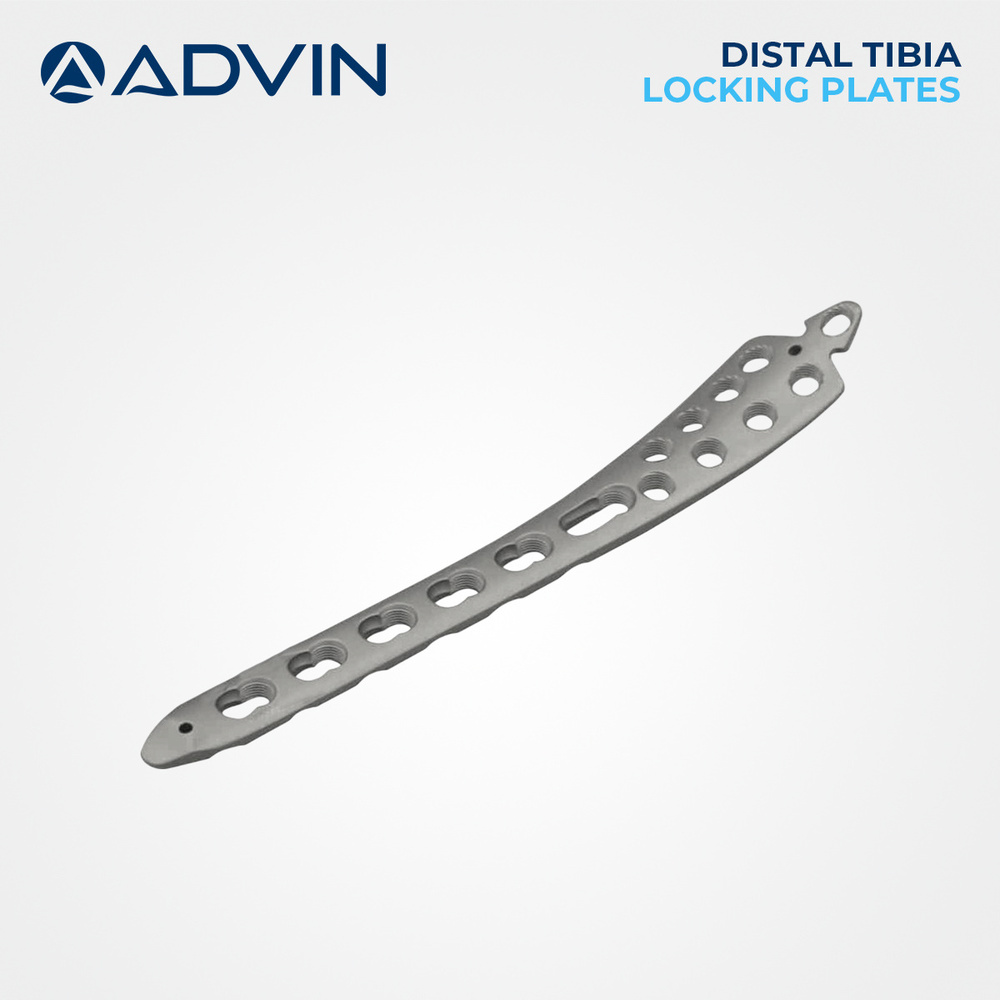
Distal Tibia Plates are widely used in orthopedic trauma surgeries for managing fractures of the distal tibia, including intra-articular and metaphyseal fractures. Manufactured from high-quality surgical-grade stainless steel, they offer durability, strength, and biocompatibility. Advin Health Care supplies these plates to help surgeons achieve precise fracture fixation while reducing the risk of implant loosening. Their anatomical design allows for proper adaptation to the distal tibial contour, ensuring stability and facilitating faster post-operative recovery. These plates are compatible with locking screws, providing secure fixation even in osteoporotic or comminuted fractures.
Advanced Features:
-
Anatomically contoured for distal tibial fractures
-
Surgical-grade stainless steel for strength and durability
-
Compatible with locking screws for secure fixation
-
Provides stability in osteoporotic and comminuted bone
-
Ideal for intra-articular, metaphyseal, and distal tibial fractures
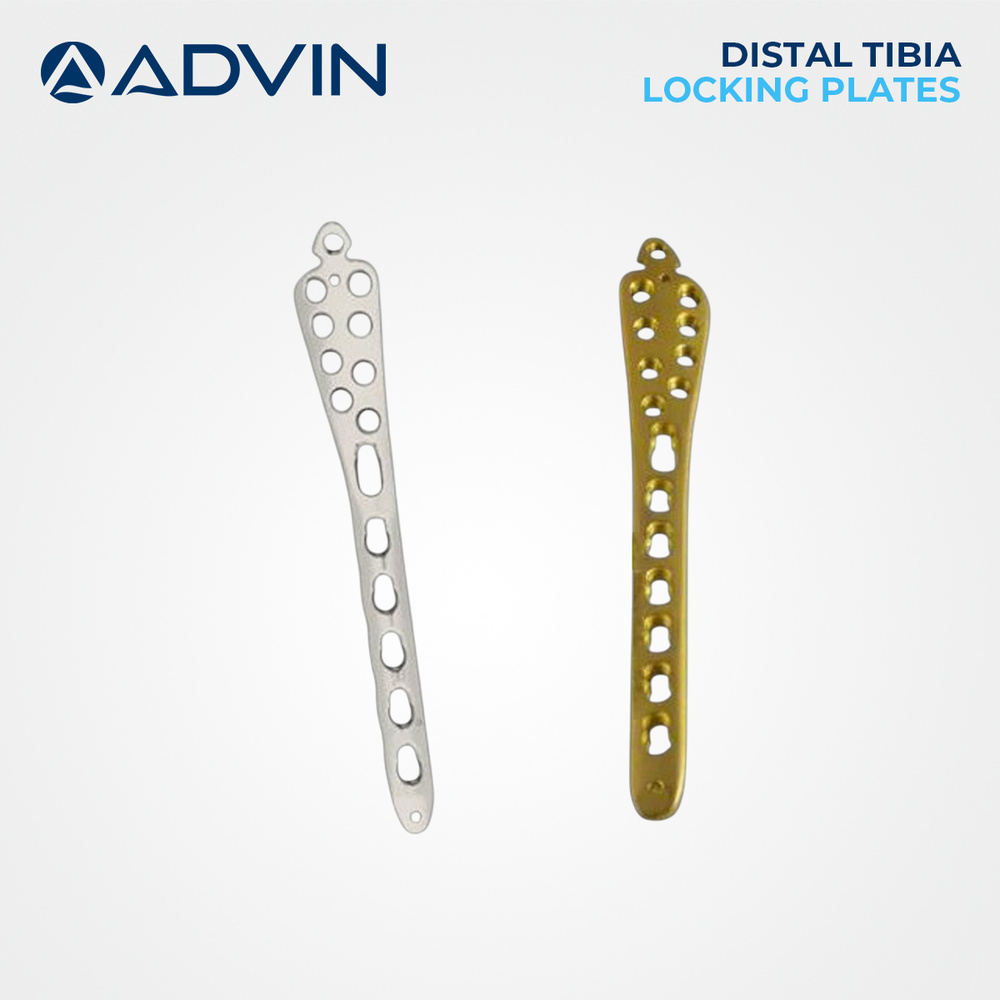
Anatomical Fit and Precision EngineeringEvery Distal Tibia Plate is forged and CNC machined to guarantee anatomical contouring and a precise fit, matching a wide variety of distal tibia fracture patterns. This careful engineering not only promotes optimal fracture fixation but also minimizes patient discomfort, enhancing the overall outcome of orthopedic surgeries.
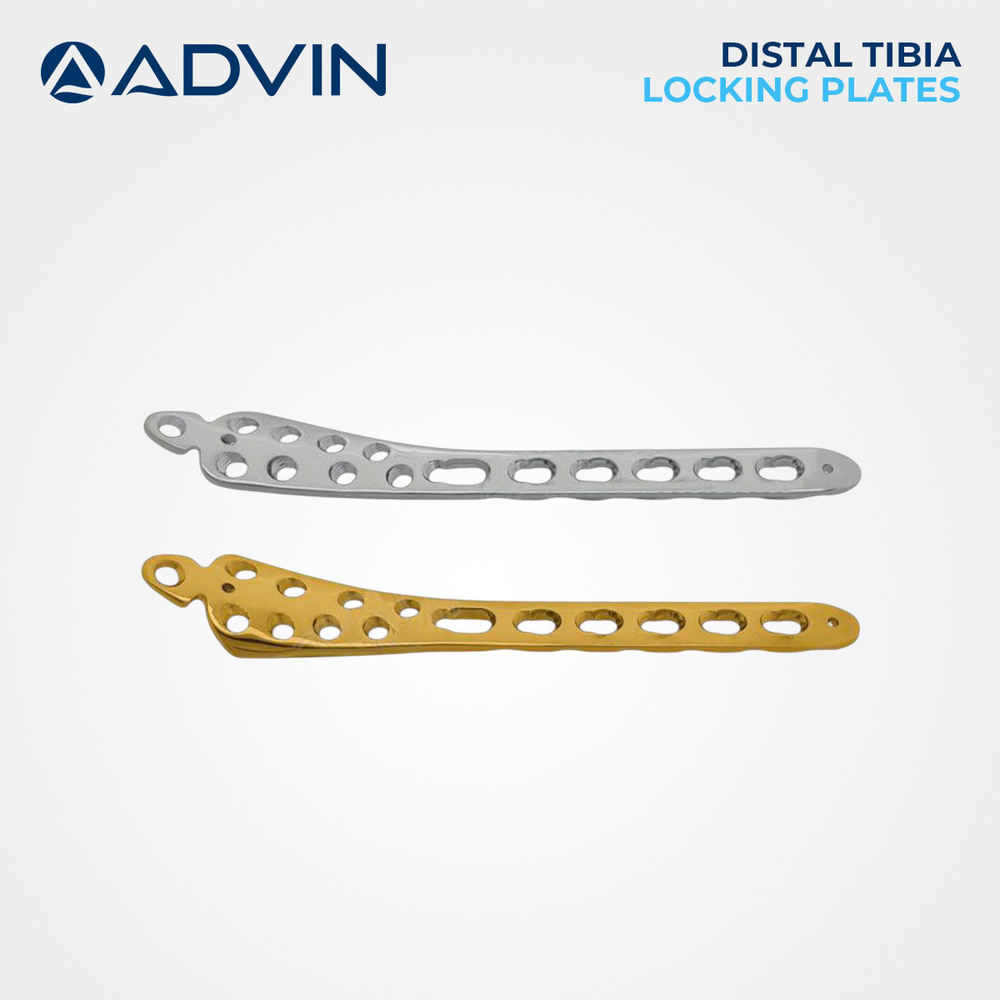
Versatile Compatibility and Safe FixationEquipped with combi-holes, the plate is compatible with both 3.5 mm locking and cortical screws, allowing surgeons flexibility in surgical technique and screw selection. Its robust material choices-titanium or stainless steel-combined with rounded edges, ensure both strength and gentle interaction with surrounding tissues.
Quality, Compliance, and Ease of UseThe plates are produced in compliance with strict ISO 13485 standards and are CE certified, giving confidence in safety and effectiveness. They are offered as single-use, sterile or non-sterile implants, with a shelf life of five years, and should be stored in clean, dry conditions until use.
FAQ's of Distal Tibia Plate:
Q: How is the Distal Tibia Plate used in orthopedic surgery?
A: The Distal Tibia Plate is surgically implanted to stabilize distal tibia fractures, both extra-articular and intra-articular. It's fixed alongside the tibia using 3.5 mm locking or cortical screws placed through combi-holes, ensuring reliable and anatomically accurate fracture fixation.
Q: What hole variants and plate lengths are available for this product?
A: The plate is available in configurations ranging from 6 to 14 holes, with the length varying according to the selected variant to match the patient's anatomy and fracture pattern. This allows tailored treatment for different clinical situations.
Q: When should I choose a polished or titanium anodized surface finish?
A: A polished finish is ideal for standard orthopedic needs, providing smoothness and corrosion resistance. The titanium anodized option offers enhanced biocompatibility and scratch resistance, often preferred when titanium implants are selected for their advanced properties.
Q: Where should the Distal Tibia Plate be stored prior to use?
A: These plates should be kept in original packaging within a clean, dry environment to maintain their integrity and prevent contamination until they are ready to be sterilized or used.
Q: What are the benefits of the anatomical contouring and low-profile design?
A: The anatomical contour and low-profile design minimize irritation to soft tissue, promote a better anatomical fit, and facilitate faster patient recovery while maintaining secure fixation for the healing process.
Q: Is the Distal Tibia Plate radiolucent?
A: No, the plate is made from metal (stainless steel or titanium) and is not radiolucent, but its sleek profile allows for effective imaging of fracture healing during post-operative follow-up.
Q: What certifications and compliance standards does this plate meet?
A: The Distal Tibia Plate is ISO 13485 compliant and CE certified, reflecting adherence to rigorous international quality and safety standards for orthopedic implants.

 Send Inquiry



 Send Inquiry

 Send Inquiry
 English
 Spanish
 French
 German
 Italian
 Chinese (Simplified)
 Japanese
 Korean
 Arabic
 Portuguese