Femur Interlocking Nail About
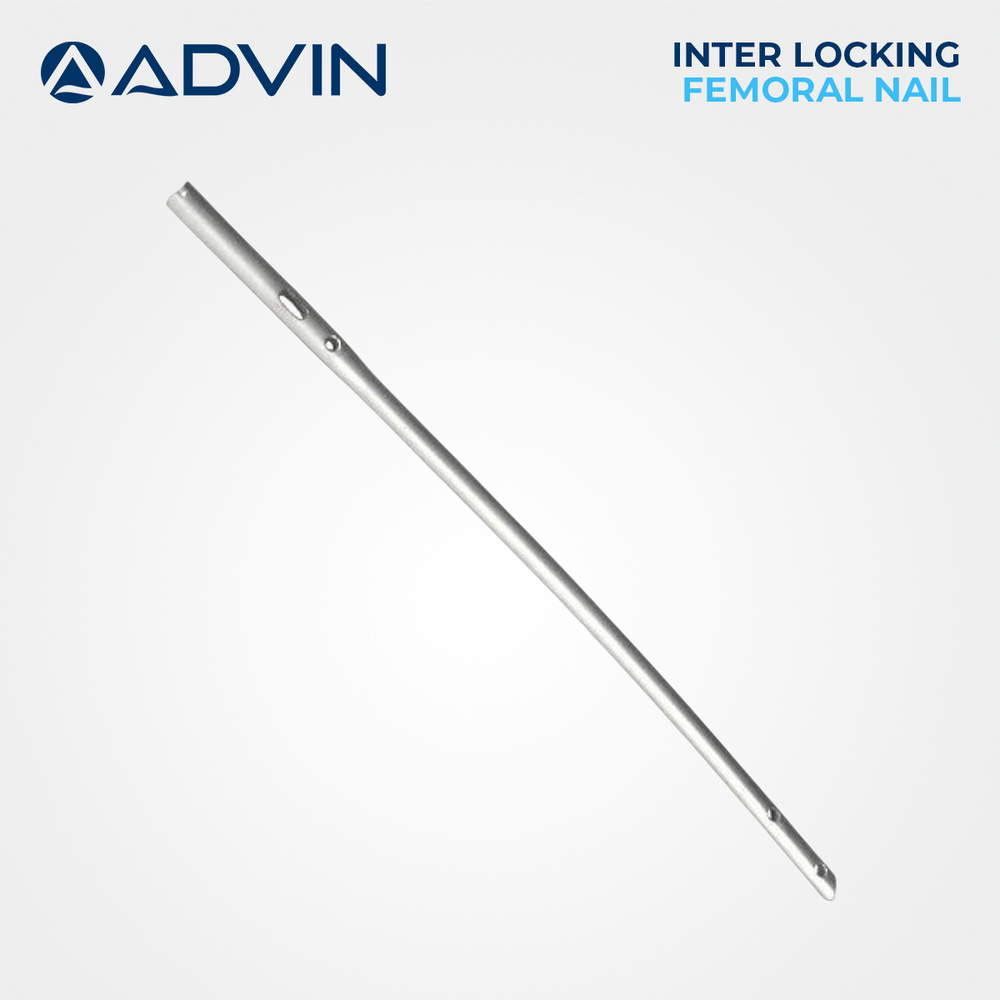
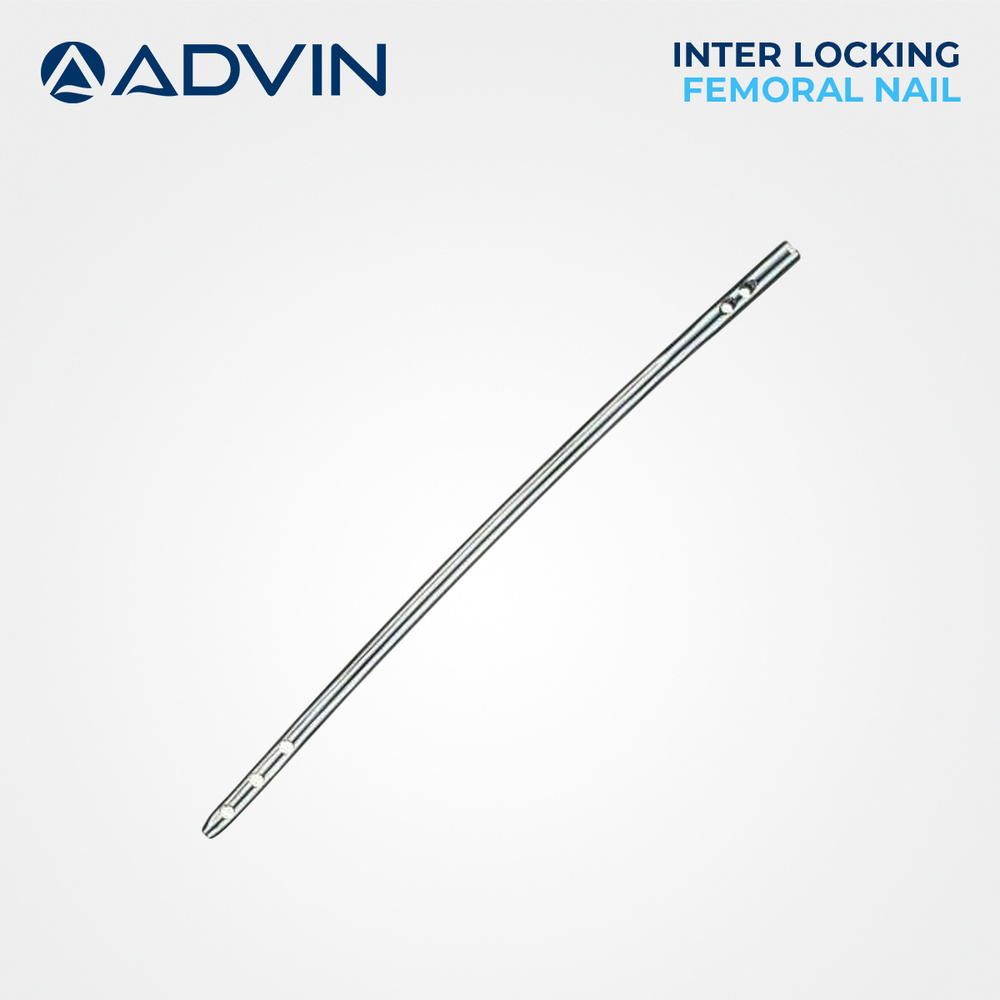
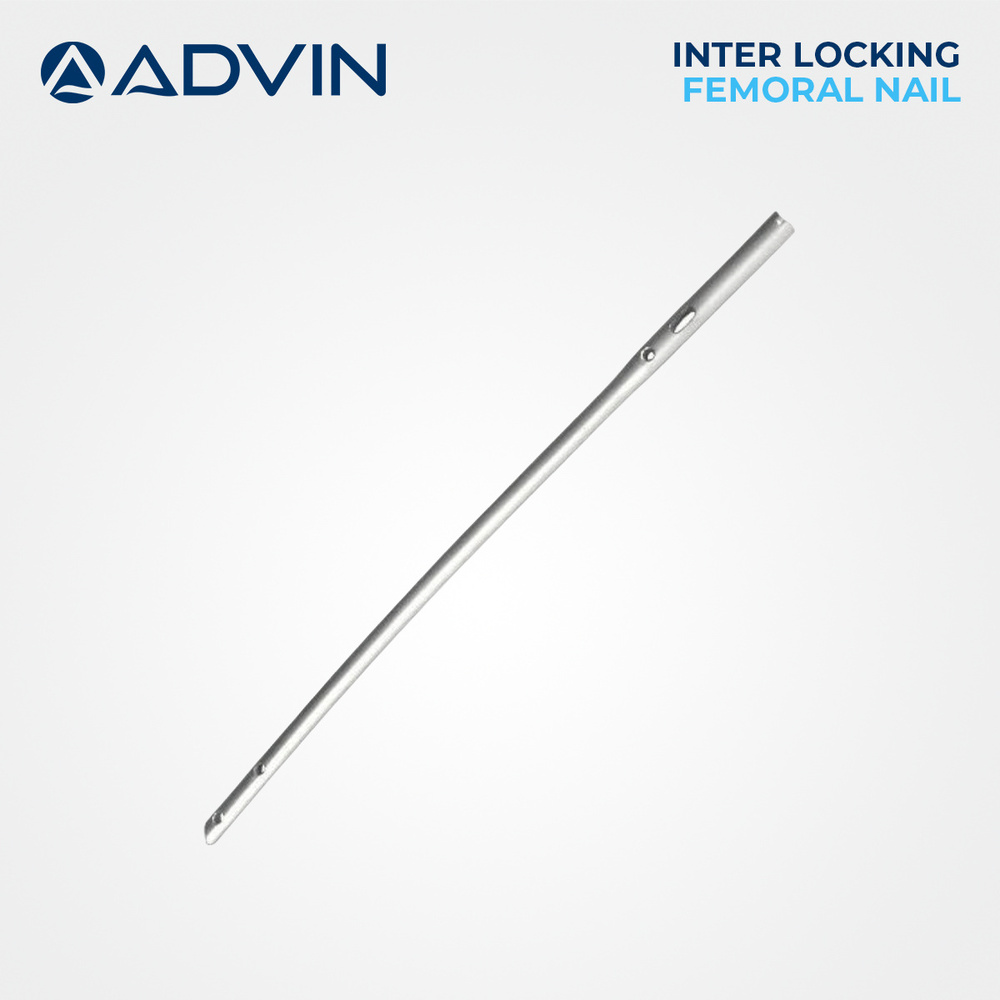
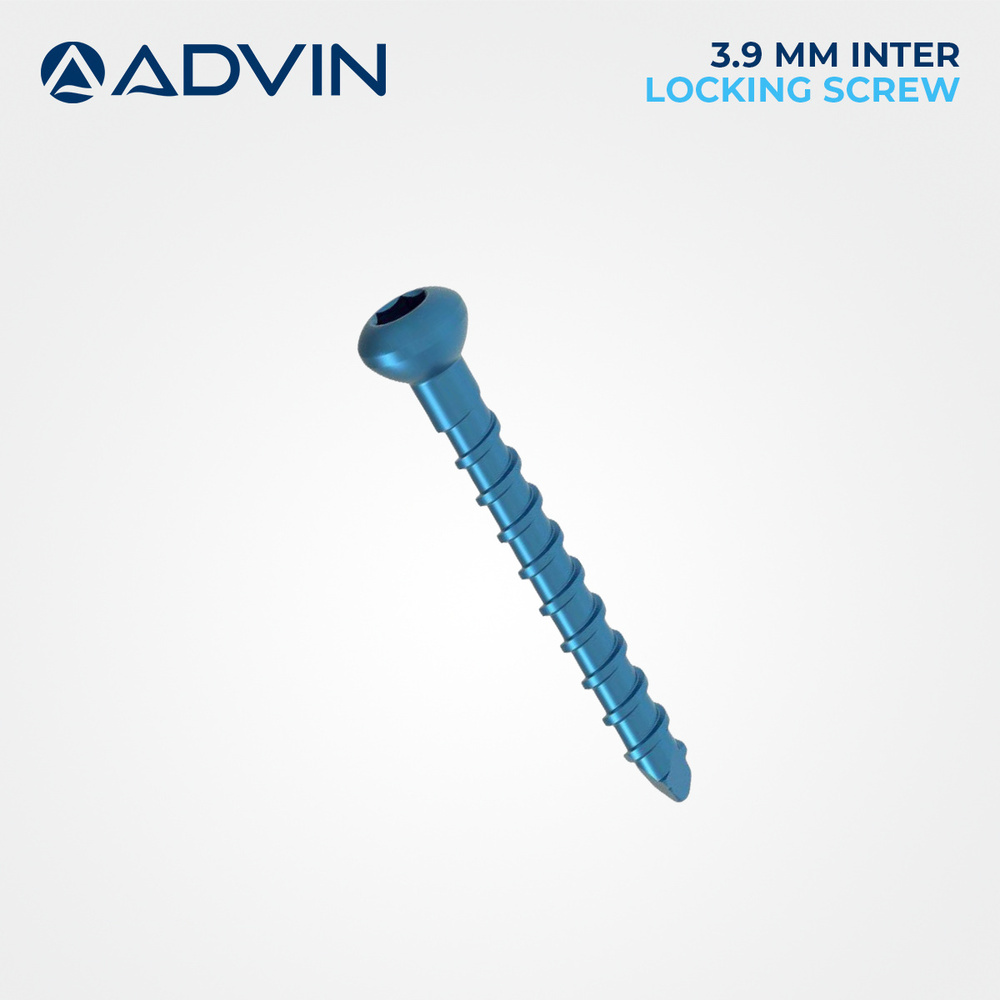
Femur Interlocking Nails are widely used in orthopedic trauma surgeries for treating diaphyseal and selected metaphyseal fractures of the femur. Manufactured from high-quality surgical-grade stainless steel, they offer excellent strength, durability, and biocompatibility. Advin Health Care provides these nails to help surgeons achieve precise fracture reduction and stable fixation, minimizing the risk of malunion or non-union. The interlocking screw system at proximal and distal ends ensures axial and rotational stability, making them suitable for complex, comminuted, or osteoporotic fractures. These nails facilitate early rehabilitation, improving functional recovery and patient outcomes in femoral fracture management.
Advanced Features:
-
High-strength surgical-grade stainless steel construction
-
Interlocking screws for axial and rotational stability
-
Anatomically designed for femoral shaft fractures
-
Effective in osteoporotic, comminuted, and long bone fractures
-
Promotes early weight-bearing and faster post-operative recovery
Advanced Precision and CompatibilityThis Femur Interlocking Nail is engineered to match the anatomical curvature of the femoral shaft, supporting highly accurate alignment and fixation. It is available in various lengths and diameters, ensuring compatibility with a wide range of patient anatomies. The device's threaded locking holes are meticulously designed to accept standard interlocking screws, suitable for adult and adolescent patients.
Enhanced Safety and SterilityEach nail is gamma or EO sterilized and individually packaged to maintain sterility until use. CE marking and ISO 13485 certification attest to rigorous quality and safety standards. The product offers a shelf life of up to 5 years, provided it is stored in a cool, dry place away from direct sunlight, assuring readiness and safety in clinical settings.
Optimized for Orthopedic SurgeryBuilt for minimally invasive procedures, this interlocking nail facilitates efficient and safe surgical options for femoral fractures. Its non-radiolucent metallic construction ensures clear radiographic visibility during and after the procedure, enhancing post-operative monitoring and anatomical alignment.
FAQ's of Femur Interlocking Nail:
Q: How is the Femur Interlocking Nail inserted during surgery?
A: The nail is introduced through a minimally invasive technique using standard femur interlocking instruments. The procedure involves precise alignment and insertion through a small incision, reducing tissue disruption and promoting faster recovery.
Q: What are the main benefits of using this nail for femoral fractures?
A: This interlocking nail provides stable fixation due to both proximal and distal locking options, supports accurate anatomical alignment, reduces operative time, and enables early mobilization for improved patient outcomes.
Q: When should this nail be used in orthopaedic procedures?
A: The femur interlocking nail is designed for adult and adolescent patients with femoral shaft fractures requiring intramedullary fixation, especially when stable, load-sharing fixation and minimal soft tissue disturbance are desired.
Q: Where can the Femur Interlocking Nail be applied?
A: It is specifically intended for the femoral shaft. The nail conforms to the natural anatomical curve, making it suitable for various fracture patterns in this region.
Q: What makes this nail compatible with standard orthopedic equipment?
A: The device features precision-drilled threaded holes and is dimensioned to fit standard femur interlocking instruments, allowing seamless integration into established surgical workflows.
Q: How should the nail be stored before use?
A: Store the product in a cool, dry place away from direct sunlight to maintain its sterility and mechanical properties throughout its five-year shelf life.
Q: What is the surface finish and why is it important?
A: The nail is available in both polished and matte finishes, which enhance corrosion resistance and facilitate smoother insertion, reducing the risk of soft tissue irritation and improving surgeon handling.

 Send Inquiry



 Send Inquiry

 Send Inquiry
 English
 Spanish
 French
 German
 Italian
 Chinese (Simplified)
 Japanese
 Korean
 Arabic
 Portuguese