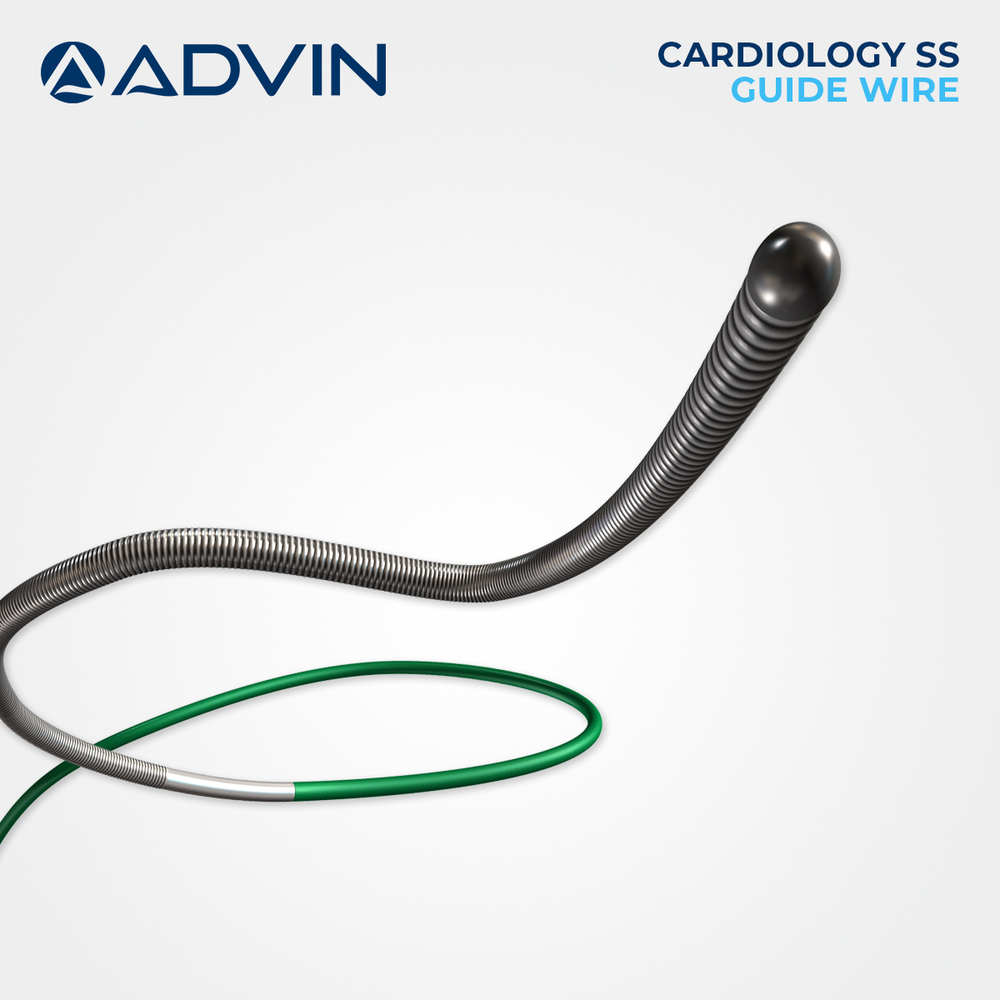
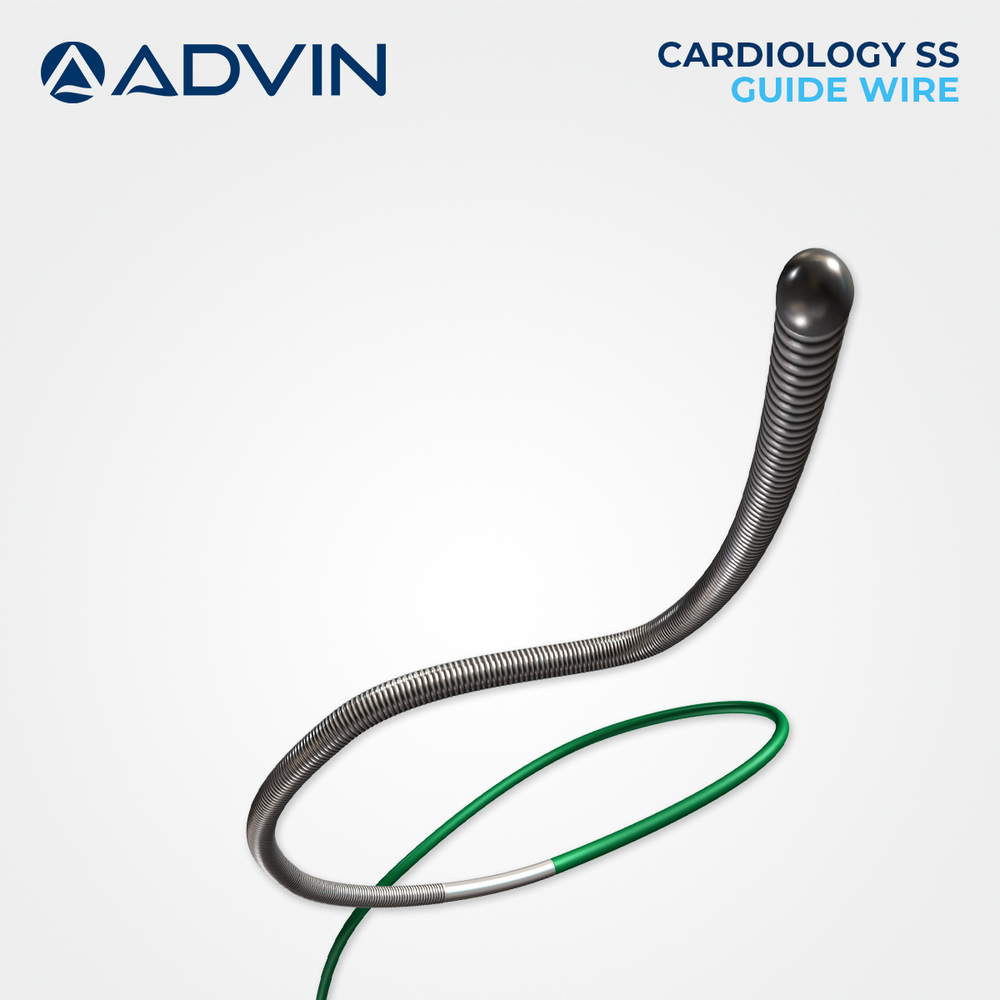
About Flexible SS Guide Wire
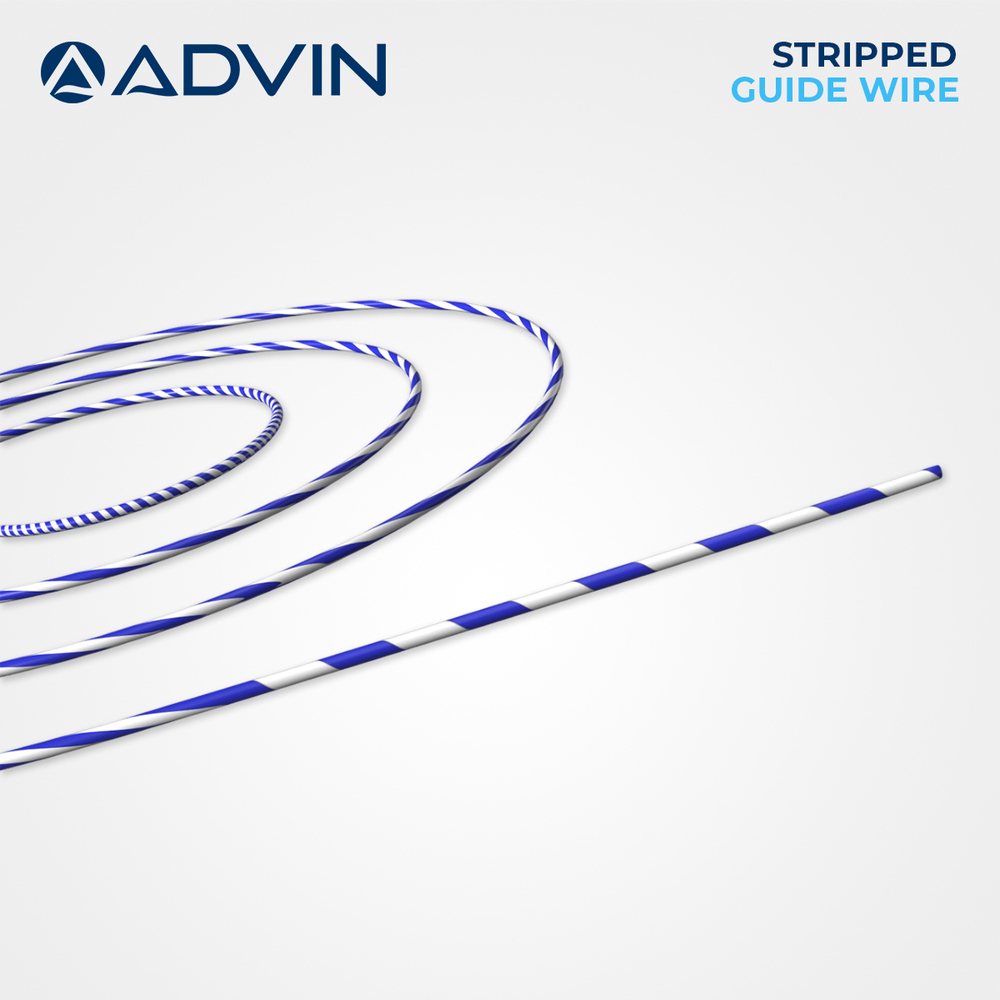
Advin Health Care is a trusted manufacturer of Flexible Stainless Steel (SS) Guide Wires designed to meet international quality standards. These guide wires are engineered to provide enhanced flexibility along with the strength of stainless steel, ensuring smooth navigation and controlled performance during vascular access and interventional procedures.
Key Features
- Flexible stainless steel construction for improved maneuverability
- Balanced strength and flexibility for optimal performance
- Excellent pushability for smooth device advancement
- Reliable torque control for precise navigation
- Atraumatic tip design for safe vascular access
Specifications
- Type: Flexible SS Guide Wire
- Material: Medical-grade Stainless Steel
- Surface: Standard / PTFE-coated options available
- Tip Options: Straight / J-tip
- Usage: Single-use / Sterile
- Application: Vascular access and interventional procedures
Certifications
CE, ISO 13485, and ISO 9001 certified
Product Keywords
Flexible SS Guide Wire, Stainless Steel Guidewire, Medical Guide Wire, Vascular Guide Wire, Interventional Guidewire
, , ,
Gua flexible de acero inoxidable, gua de acero inoxidable, gua mdica, gua vascular, gua intervencionista
Fil guide flexible en acier inoxydable, fil guide mdical, fil guide vasculaire, fil guide interventionnel
Superior Navigation and FlexibilityEngineered for high flexibility and kink resistance, the guide wire adapts seamlessly to challenging anatomies. This allows for precise and smooth navigation during procedures like angiography or catheterization without compromising on control or safety.
Enhanced Fluoroscopic VisualizationThe radiopaque tip design enhances visibility under fluoroscopy, ensuring accurate positioning and reducing procedural risks. Its smooth, atraumatic tip helps minimize vessel trauma, supporting safer outcomes during critical vascular or urological access.
International Standards and Sterile AssuranceManufactured to international ISO and CE guidelines, each guide wire is EO sterilized and individually blister packed to ensure sterility and patient safety. With a shelf life of up to 3 years, it is ready for single-use, minimizing infection risk.
FAQ's of Flexible SS Guide Wire:
Q: How does the hydrophilic or PTFE coating improve guide wire performance?
A: The hydrophilic or PTFE coating significantly reduces friction, making it easier to advance or withdraw the guide wire through vessels or anatomical pathways. This enhancement promotes smoother navigation and minimizes trauma during procedures.
Q: What types of procedures can this flexible guide wire be used for?
A: This guide wire is suitable for vascular access, angiography, urological interventions, and general catheterization procedures, providing reliable guidance and access in a range of clinical applications.
Q: When should I choose a straight, J-tip, or angled tip configuration?
A: The tip configuration depends on the anatomy and procedure. Straight tips offer direct navigation, J-tips are preferred in tortuous or sensitive vessels to prevent trauma, while angled tips provide extra maneuverability around anatomical curves.
Q: Where should the guide wire be stored before use?
A: Store the guide wire in a cool, dry place and keep it in its original blister packaging until use. This preserves sterility and maintains the shelf life of up to 2-3 years.
Q: What process ensures the sterility and safety of this guide wire?
A: Each guide wire is ethylene oxide (EO) sterilized and securely sealed in an individual blister pack. The manufacturing meets international medical device standards (ISO/CE), ensuring safety and sterility.
Q: How does the radiopaque tip benefit real-time procedures?
A: The radiopaque tip increases visibility under fluoroscopy, allowing clinicians to monitor and guide the wire's progress in real time, thus supporting precise and safe navigation during interventions.
Q: What are the advantages of using a high-precision stainless steel guide wire?
A: High-precision stainless steel construction delivers superior flexibility, kink resistance, and accurate guidance. This reduces procedural risks and improves outcomes across various vascular and urological applications.

 Send Inquiry



 Send Inquiry

 Send Inquiry
 English
 Spanish
 French
 German
 Italian
 Chinese (Simplified)
 Japanese
 Korean
 Arabic
 Portuguese