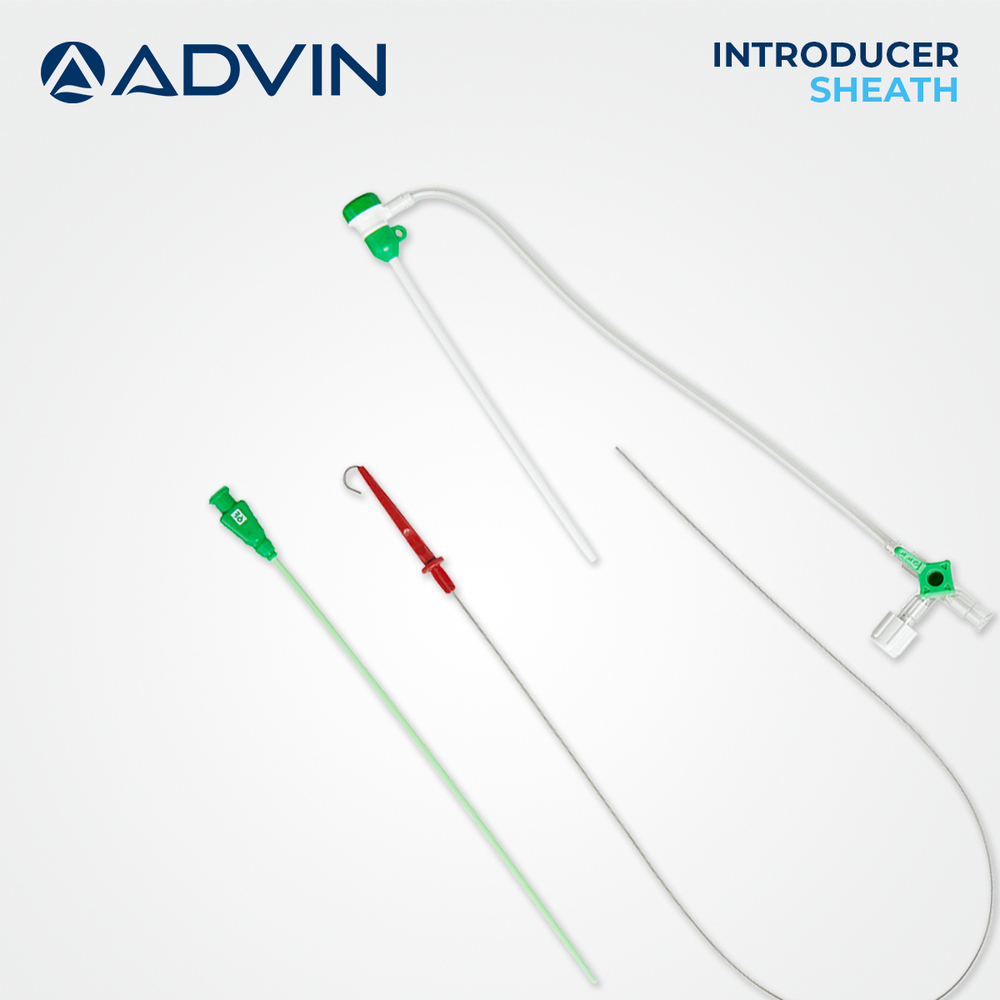
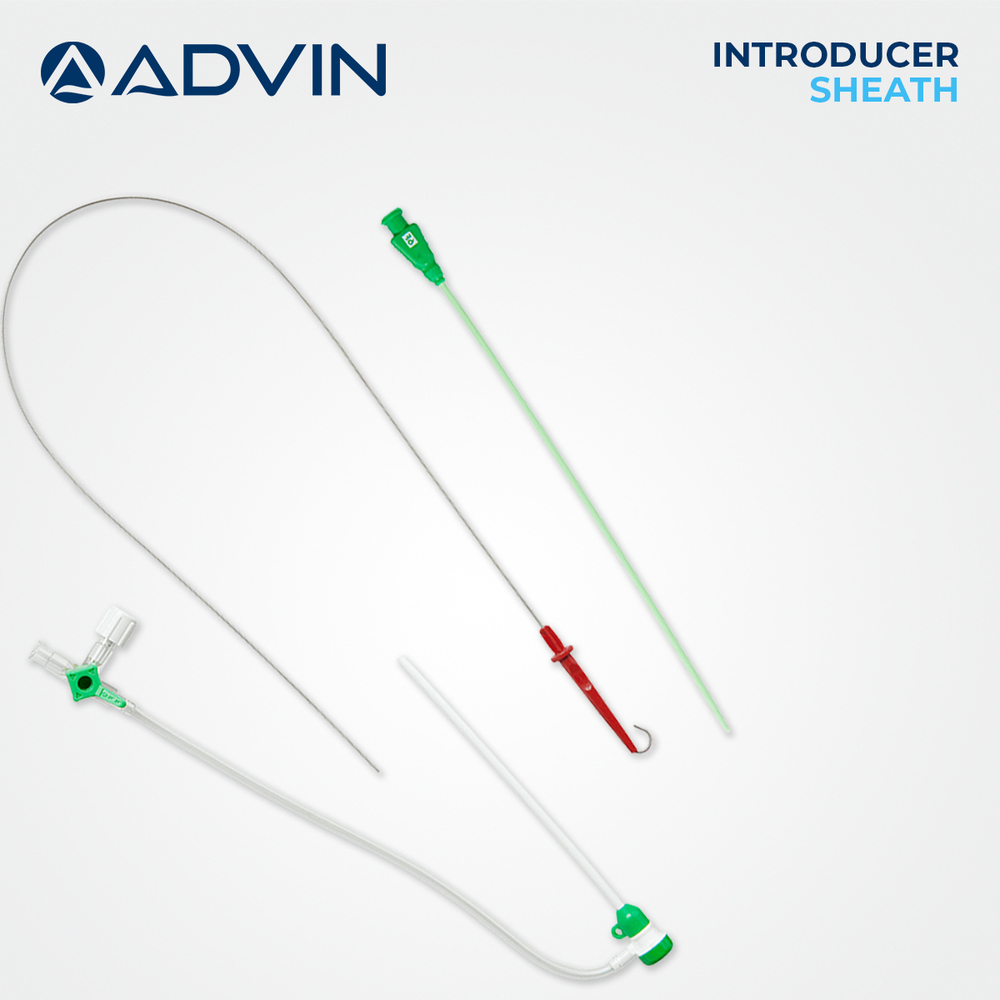
About Introducer Sheath Femoral
An introducer sheath can be used to introduce catheters or other devices to perform endoluminal (inside the hollow organ) procedures, such as angioplasty. Fluoroscopy may be used to confirm the position of the catheter and to maneuver it to the desired location. Injection of radio contrast may be used to visualize organs. Interventional procedures, such as thermoablation, angioplasty, embolization or biopsy, may be performed.
Advanced Features
- Smooth passing of guide wire to Dilator
- Kink Resistant
- Minimum resistance smooth taper
- Enhanced Tip
- Sterile ETO
Certifications
We are certified with CE, ISO 13485, and ISO 9001 standards.
Product Keywords
Introducer Sheath Femoral, Femoral Access Sheath, Vascular Introducer Sheath, Coronary Access Sheath, Peripheral Intervention Sheath, Catheter Introducer Sheath
, , , , , .
Vaina introductora femoral, vaina de acceso femoral, vaina introductora vascular, vaina de acceso coronario, vaina de intervencin perifrica, vaina introductora de catter
Gaine d'introduction fmorale, gaine d'accs fmorale, gaine d'introduction vasculaire, gaine d'accs coronaire, gaine d'intervention priphrique, gaine d'introduction de cathter
Reliable Vascular Access SolutionOur Femoral Introducer Sheath sets a new standard in vascular access due to its high precision placement, kink resistance, and real-time operation. Designed for both adult and pediatric use, it facilitates the safe and convenient introduction of catheters into femoral arteries and veins. The advanced atraumatic tip minimizes vessel trauma, while its transparent and radiopaque construction maximizes procedural visibility for clinicians.
Safety and Compatibility AssuredThis device incorporates a non-return hemostasis valve and luer lock connection to ensure secure, leak-free performance during interventions. It is latex-free, addressing allergy concerns for sensitive patients, and EO sterilized for uncompromised safety. With compatibility for standard guidewires, the sheath simplifies the catheterization process, making it reliable for a range of interventional procedures.
FAQ's of Introducer Sheath Femoral:
Q: How is the Femoral Introducer Sheath used during vascular access procedures?
A: The sheath is inserted into the femoral artery or vein, allowing clinicians to introduce catheters safely and efficiently. Its atraumatic tip and kink-resistant design ensure smooth vessel entry, while the included guidewire and introducer needle support precise placement.
Q: What are the benefits of the non-return hemostasis valve?
A: The non-return hemostasis valve maintains a closed system, preventing backflow and reducing blood loss during catheter insertion. This enhances patient safety and minimizes procedural cleanup.
Q: When should this introducer sheath be used?
A: It is ideal for adult and pediatric vascular access, especially in interventional cardiology and vascular surgery when reliable, high-precision catheter introduction via the femoral artery or vein is required.
Q: Where should the sheath be stored before use?
A: The device should be stored unopened in a cool, dry place away from sunlight to maintain its sterility and effectiveness throughout its 5-year shelf life.
Q: What guidewires are compatible with this sheath?
A: This introducer sheath is compatible with standard guidewires, ensuring widespread use and simplifying integration with existing clinical tools.
Q: Is this product reusable?
A: No, this sheath is designed for single use only. Reusing or re-sterilizing it may compromise patient safety and product integrity.
Q: What are the key features that assist with accurate placement?
A: The sheath includes radiopaque markings for visibility under imaging, a kink-resistant build, and an advanced atraumatic tip, all contributing to high-precision placement and atraumatic vessel access.

 Send Inquiry



 Send Inquiry

 Send Inquiry
 English
 Spanish
 French
 German
 Italian
 Chinese (Simplified)
 Japanese
 Korean
 Arabic
 Portuguese