About Proximal Femoral Nail (Short) (25cm)
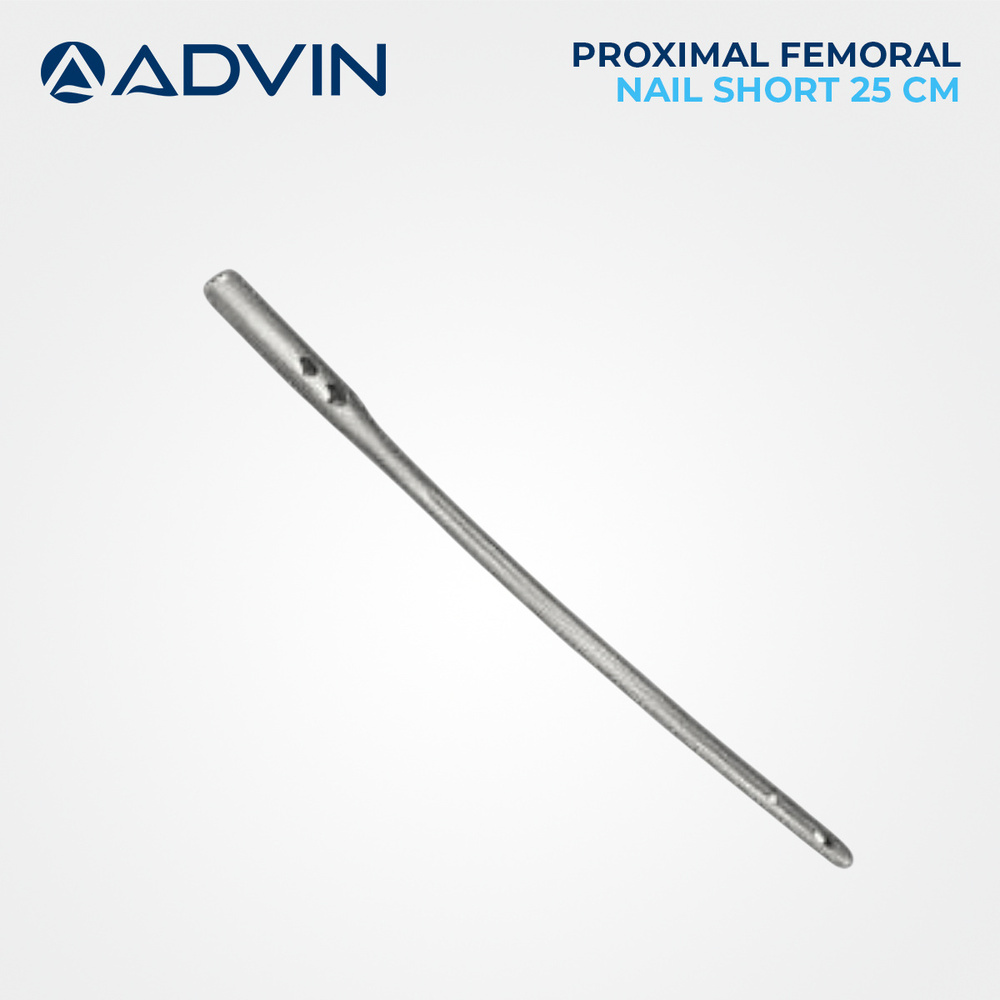
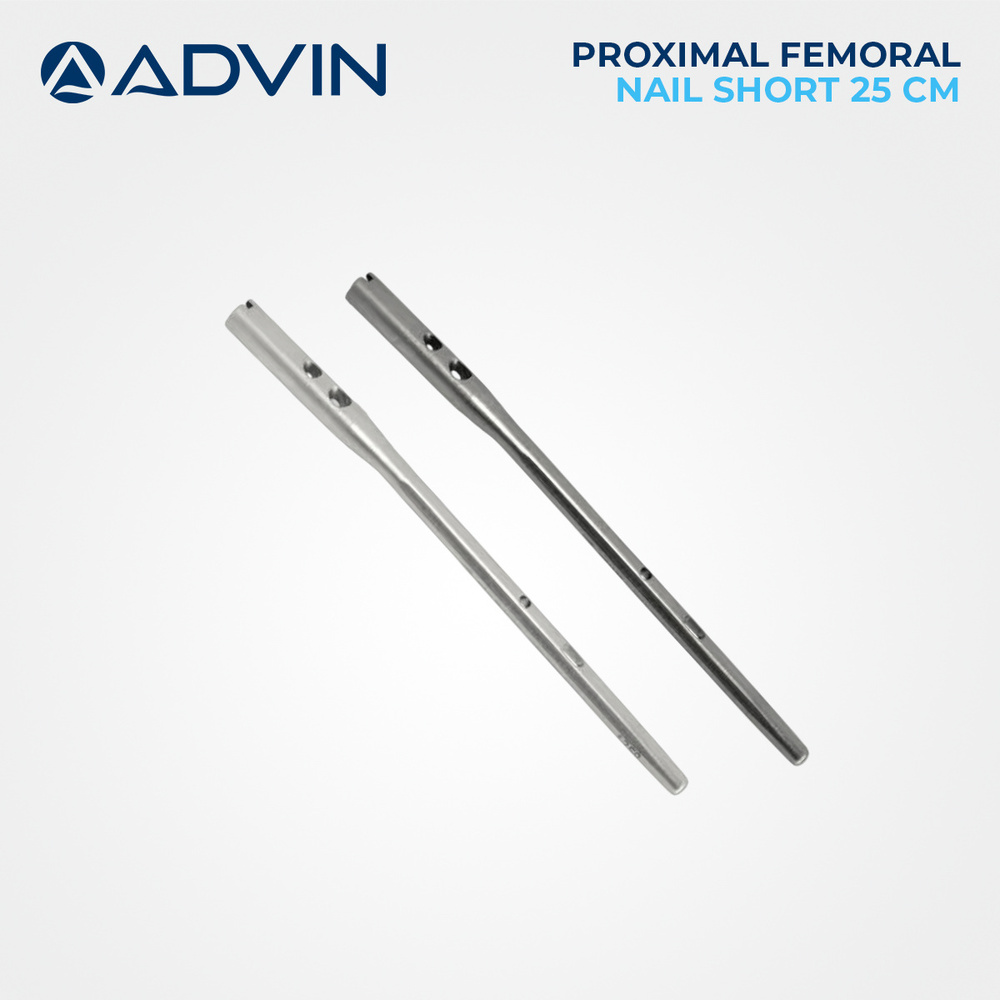
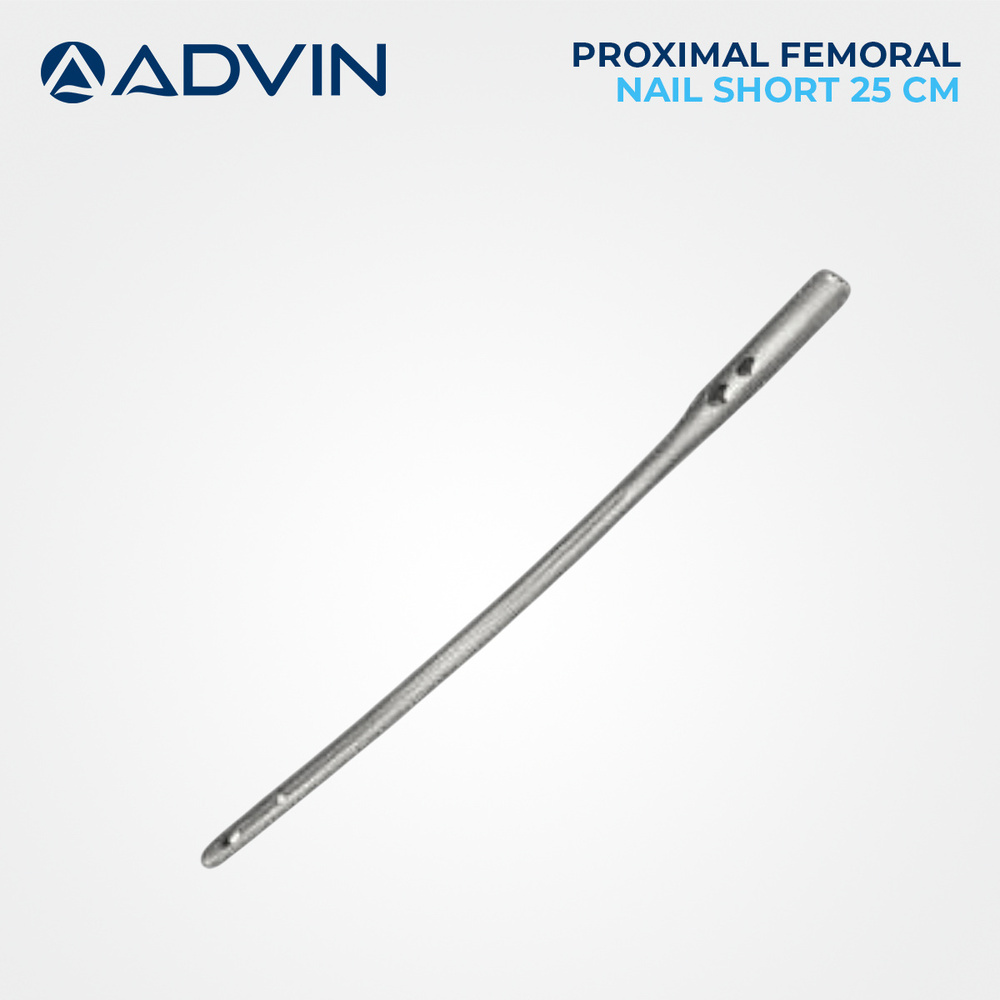
Advin Health Care manufactures the Proximal Femoral Nail (P.F.N) (Short) (25cm) using high-quality titanium or stainless steel to ensure strength, durability, and biocompatibility. Its 25cm length makes it suitable for short femoral fractures, particularly in the proximal region, including femoral neck and intertrochanteric fractures. The anatomically contoured design allows minimally invasive insertion, reducing tissue trauma and promoting faster healing. The nail accommodates interlocking screws to provide rotational and axial stability, allowing early weight-bearing. Surgeons rely on its precision engineering for safe, effective, and reliable fracture fixation.
Advanced Features:
-
Short 25cm length designed for proximal femur fractures
-
Made of high-quality stainless steel or titanium for strength and durability
-
Anatomically contoured for accurate fit in proximal femur
-
Supports interlocking screws for rotational and axial stability
-
Suitable for minimally invasive insertion to reduce recovery time
Precision and Versatility in Femoral Fracture FixationConstructed from high-strength stainless steel or titanium alloy, the Proximal Femoral Nail (Short) offers surgeons flexibility with options in four diameters. Its cannulated, slotted design and anti-rotation features optimize bone support and stability for challenging proximal femoral fractures. Radiopaque markings enable real-time, accurate placement during procedures, while both proximal and distal locking bolts provide secure fixation.
Safe, Sterile, and Easy to UseEvery nail is individually sterilized using EO Gas or Gamma Sterilization and packaged in a secure blister pack. Compatible with standard surgical instrumentation, this implant is designed for single-use, ensuring optimal safety for each patient. High manufacturing precision and reliable packaging ensure consistency from the operating room to patient recovery.
FAQs of Proximal Femoral Nail (Short) (25cm):
Q: How is the Proximal Femoral Nail (Short) used for fracture fixation?
A: The Proximal Femoral Nail (Short) is inserted into the femoral canal using a standard intramedullary nailing technique. It stabilizes intertrochanteric or subtrochanteric femoral fractures by providing internal support and preventing rotation through its anti-rotation design. Locking bolts secure the implant proximally and distally for optimal fixation.
Q: What are the available size options for this nail and how do I select the correct diameter?
A: This femoral nail is available in diameters of 9mm, 10mm, 11mm, and 12mm, all with a standardized length of 25cm. The appropriate diameter is typically chosen based on patient anatomy and preoperative imaging to ensure a secure fit and optimal bone support.
Q: When should I consider using the Proximal Femoral Nail (Short)?
A: This implant is indicated for the surgical fixation of intertrochanteric or subtrochanteric femoral fractures. Surgeons may opt for this design when dealing with proximal femoral injuries in adults where a short, stable nail is necessary, and minimally invasive intramedullary fixation is preferred.
Q: Where can this femoral nail be stored prior to use, and what is its shelf life?
A: The Proximal Femoral Nail should be stored in a dry, clean environment. Each unit is supplied in a sterile blister pack with a shelf life of five years from the date of sterilization, ensuring readiness and reliability for surgical teams.
Q: What are the key benefits of using this femoral nail system?
A: Key benefits include high bending strength, biocompatibility, anti-rotation design, accurate radiopaque markings for precise intraoperative placement, and compatibility with widely used proximal femoral surgical instruments. Sterilization assurance and high manufacturing standards further enhance patient safety and surgical outcomes.
Q: How does the cannulated, slotted design improve surgical outcomes?
A: The cannulated structure facilitates guided insertion over a guide wire, while the slotted design aids in distributing stresses and enhancing stability. Together, these features enable minimally invasive, accurate placement, reducing operative time and promoting optimal healing.

 Send Inquiry



 Send Inquiry

 Send Inquiry
 English
 Spanish
 French
 German
 Italian
 Chinese (Simplified)
 Japanese
 Korean
 Arabic
 Portuguese