Tibia Interlocking Nail About
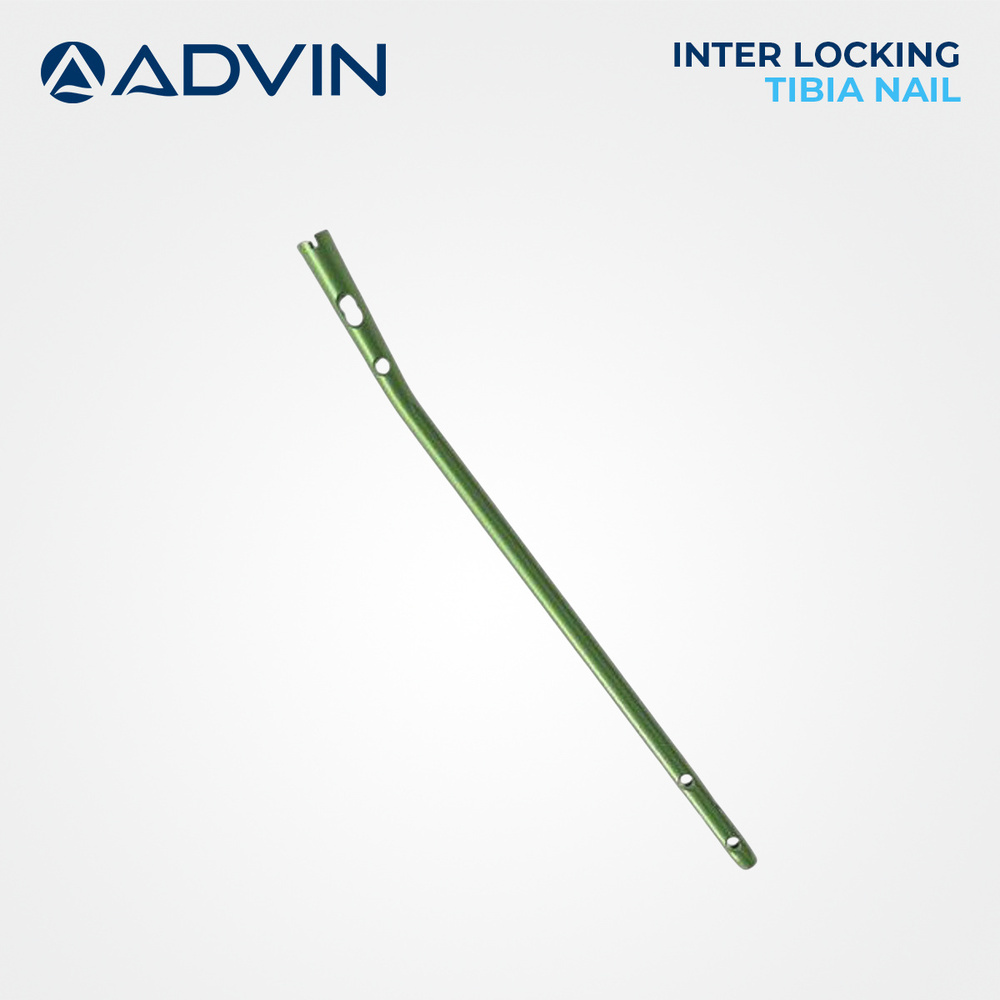
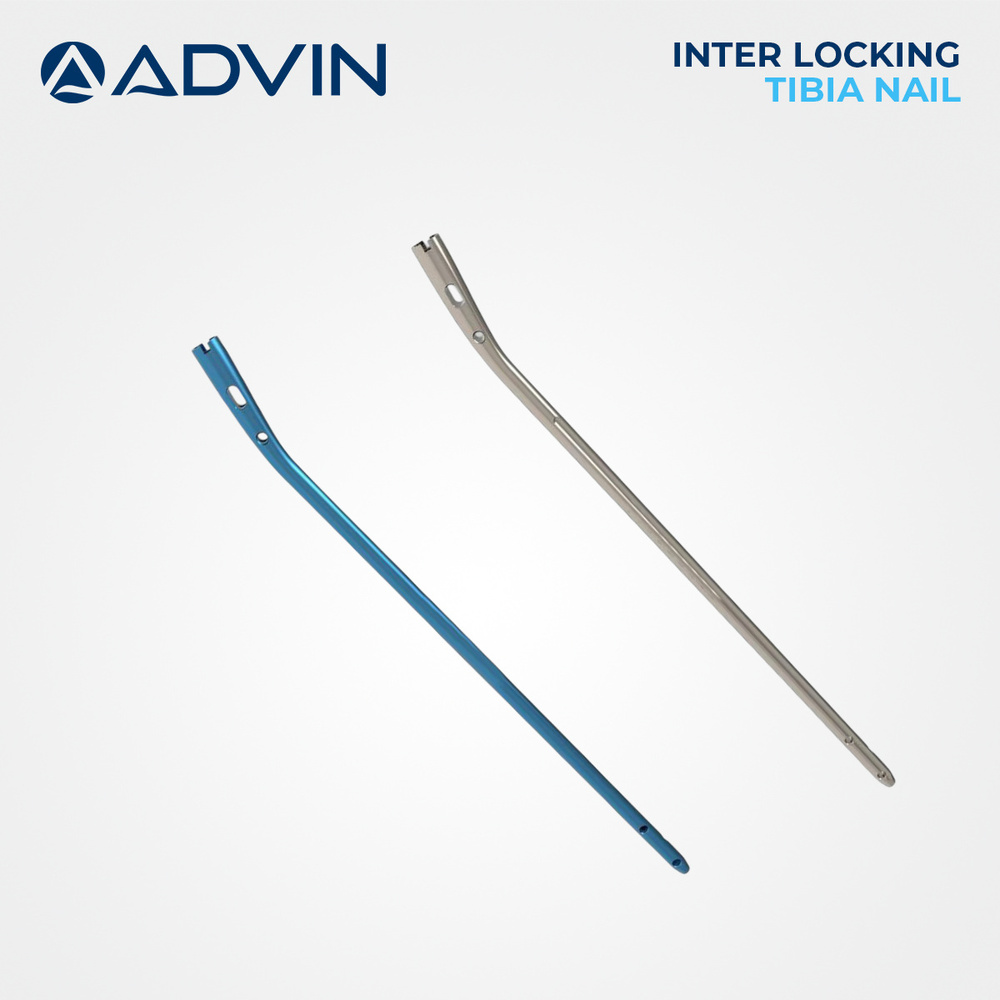
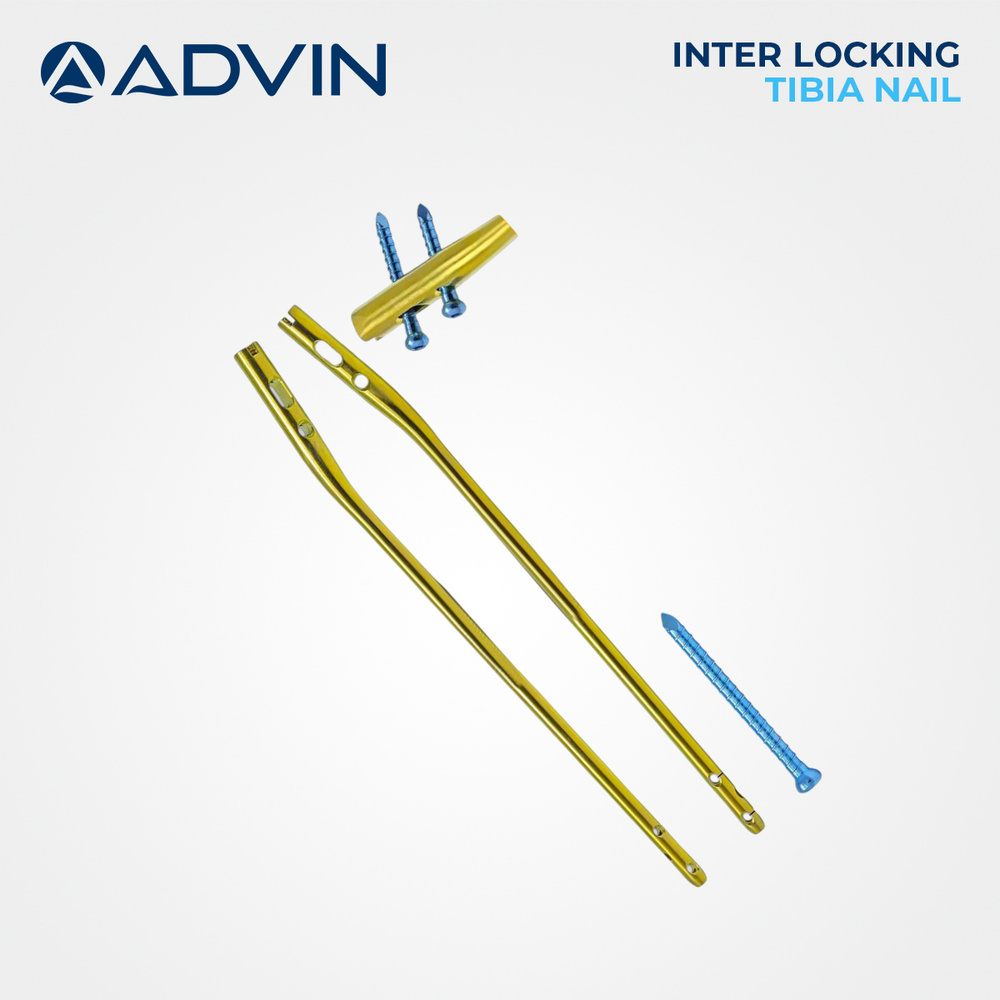
Tibia Interlocking Nails are widely used in orthopedic trauma surgeries to treat diaphyseal fractures and certain metaphyseal fractures of the tibia. Manufactured from high-quality surgical-grade stainless steel, they offer strength, durability, and biocompatibility. Advin Health Care provides these nails to help surgeons achieve precise fracture reduction and stable fixation, reducing the risk of malunion or non-union. The interlocking screw system at proximal and distal ends ensures both axial and rotational stability, making them suitable for complex or comminuted fractures, including osteoporotic bone. These nails facilitate early weight-bearing and rehabilitation, promoting faster functional recovery and improved patient outcomes.
Advanced Features:
-
High-strength surgical-grade stainless steel construction
-
Interlocking screws for axial and rotational stability
-
Anatomically designed for tibial shaft fractures
-
Suitable for osteoporotic, comminuted, and long bone fractures
-
Supports early mobilization and faster post-operative recovery
Secure Fixation and Versatile OptionsThis interlocking nail provides both cannulated and solid shapes, accommodating diverse surgical needs. The inclusion of multiple locking holes-on both the proximal and distal ends-ensures superior bone stabilization. Engineered with smooth, polished surfaces and a robust locking system, the nail minimizes micromotion and enhances healing outcomes. The range of available sizes addresses various patient anatomies and fracture patterns for optimal results.
High-Quality Material and CertificationManufactured from surgical-grade stainless steel or titanium, this nail boasts exceptional strength, corrosion resistance, and biocompatibility. It complies with ISO 13485 international standards for medical devices, ensuring safe, consistent performance. Radiolucency is not a feature, but precise design and polished finishing allow for easy insertion and secure placement under fluoroscopic guidance during orthopedic procedures.
Sterile Packaging and StorageEvery nail is individually packed in a sterile blister, maintaining its integrity until surgery. Sterilization options include ETO and autoclaving, offering flexibility before implantation. With a shelf life of five years, the implant must be stored in a dry, sterile environment to preserve its condition, minimize contamination risk, and guarantee patient safety.
FAQ's of Tibia Interlocking Nail:
Q: How is the Tibia Interlocking Nail used in surgery?
A: The Tibia Interlocking Nail is surgically inserted into the medullary canal of the tibia to provide internal fixation and stabilization of fractures. It employs both proximal and distal locking screws through multiple holes to ensure rigid fixation, align bone fragments, and support the healing process.
Q: What are the benefits of multiple locking holes in this implant?
A: Multiple locking holes on both ends of the nail allow surgeons to achieve enhanced stability for various fracture types and bone qualities. This configuration helps prevent rotational and axial movement, promoting effective healing especially in complex or unstable fractures.
Q: When should a surgeon choose cannulated versus solid nail options?
A: Cannulated nails are typically chosen when guidewire assistance is needed for precise placement, particularly in cases with narrow or challenging medullary canals. Solid nails are generally used where additional strength or load-bearing capacity is preferred. The selection depends on fracture type, patient anatomy, and surgical protocol.
Q: Where should the Tibia Interlocking Nail be stored before use?
A: The implant should be stored in a dry, sterile environment, maintaining its sterile packaging until surgery to avoid contamination and preserve its integrity. Proper storage ensures the product remains safe and effective for patient use.
Q: What process ensures the implant's sterility and safety?
A: Each Tibia Interlocking Nail is either ETO sterilized or can be autoclaved before use. Additionally, it is packed in sterile blister packs and manufactured following ISO 13485 certification standards, ensuring safety, sterility, and reliable quality for orthopedic procedures.
Q: Is the Tibia Interlocking Nail compatible with standard orthopedic instruments?
A: Yes, this nail is designed to be compatible with standard interlocking instruments commonly used in orthopedic surgeries, streamlining integration into surgical workflows and enhancing procedural efficiency.

 Send Inquiry



 Send Inquiry

 Send Inquiry
 English
 Spanish
 French
 German
 Italian
 Chinese (Simplified)
 Japanese
 Korean
 Arabic
 Portuguese