Tibia Locking Plate About
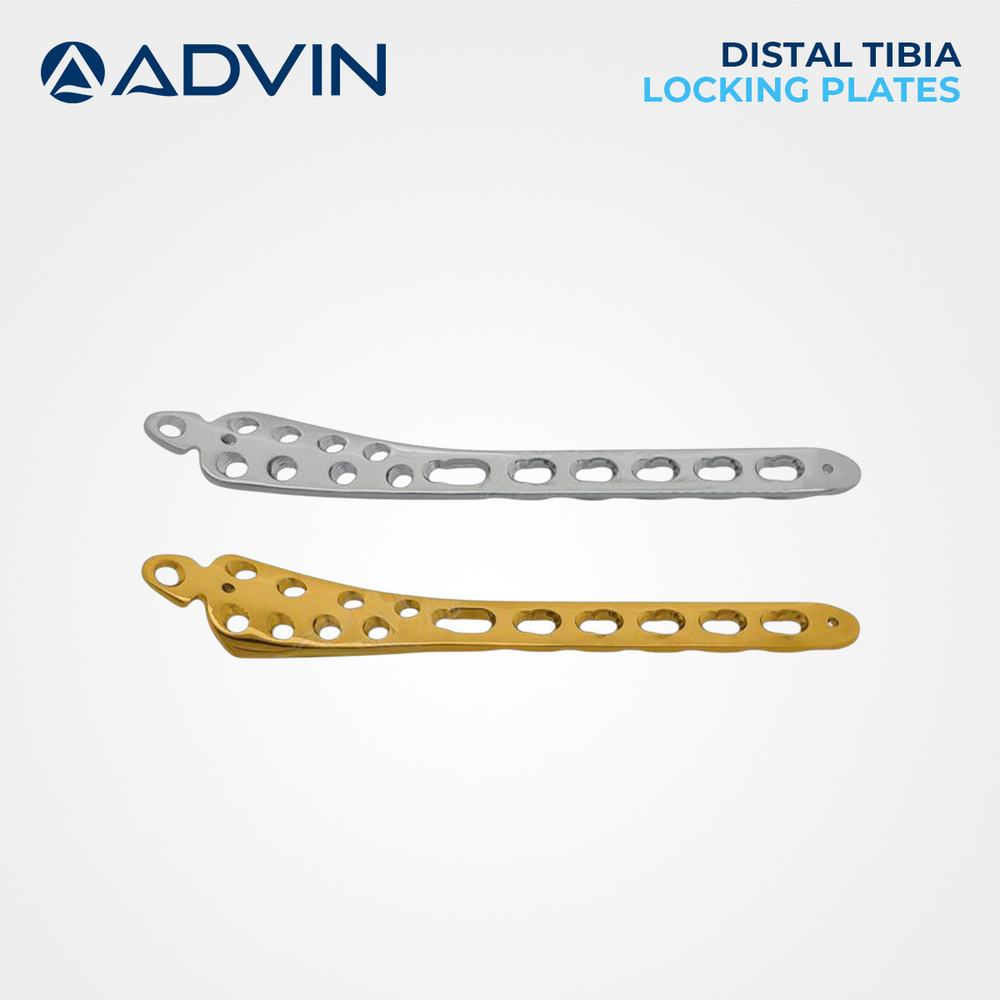
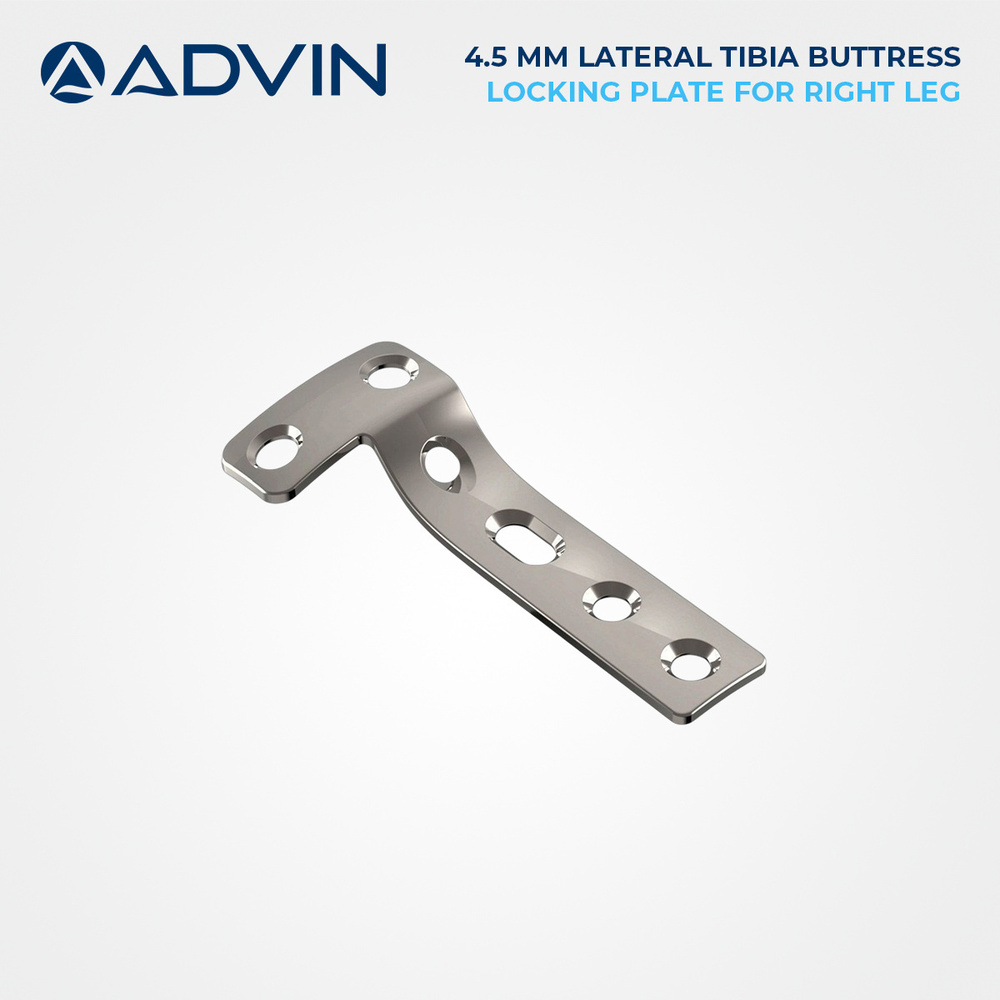
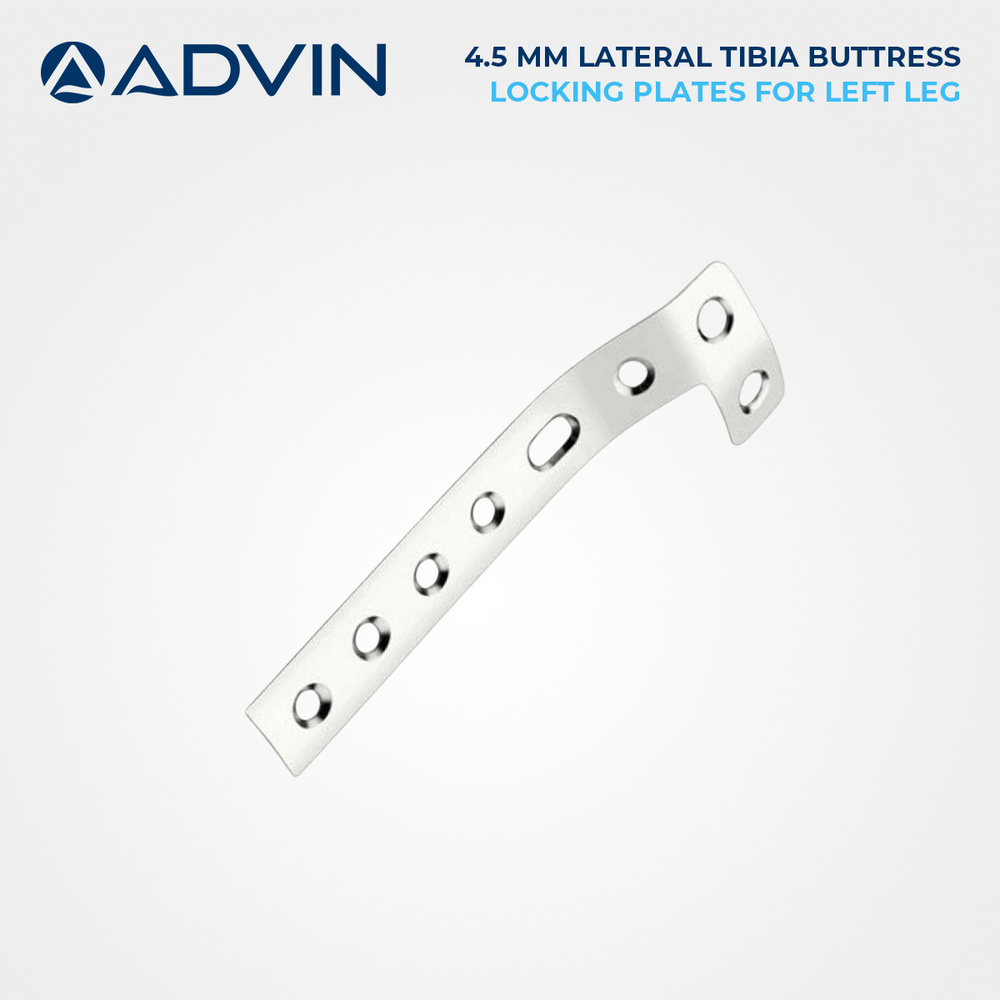
Tibia Locking Plates are commonly used in orthopedic trauma surgeries to treat fractures of the proximal and distal tibia. Made from high-quality surgical-grade stainless steel, these plates provide excellent durability, biocompatibility, and corrosion resistance. Advin Health Care offers Tibia Locking Plates that allow surgeons to achieve strong fixation without relying solely on plate-to-bone compression, reducing the chances of implant loosening. Their anatomical contouring ensures a better fit to the tibia structure, improving surgical accuracy, patient outcomes, and post-operative recovery. These plates are highly effective in managing both simple and complex tibial fractures.
Advanced Features:
-
Anatomically designed for proximal and distal tibia fixation
-
Manufactured from surgical-grade stainless steel
-
Locking mechanism provides secure plate-screw connection
-
Ensures stability in osteoporotic and comminuted bone
-
Corrosion-resistant, durable, and biocompatible
Advanced Design for Precision SurgeryOur Tibia Locking Plate features a pre-contoured anatomical shape, tailored for the lower limb/tibia. Multiple screw holes support versatile fixation strategies, allowing orthopedic surgeons to securely align and stabilize fractures. The plate's finish is available in both polished and matte, providing flexibility based on surgeon preference and clinical needs.
Superior Material Quality and ComplianceMade from stainless steel or titanium, the plate exhibits high corrosion resistance, essential for lasting implants. Biocompatibility is ensured and verified with ISO 10993 compliance. The implant is classified as a Class IIb medical device, suitable for critical surgical applications and strictly controlled with ISO 13485 and CE certifications.
Safe and Convenient PackagingEach Tibia Locking Plate is delivered in a sterile, single-use pack to minimize infection risk. Packaging preserves the plate's integrity during storage and transport. Shelf life extends up to 5 years when stored in a dry, cool space away from direct sunlight, ensuring readiness until use in the operating room.
FAQ's of Tibia Locking Plate:
Q: How is the Tibia Locking Plate used during surgery?
A: The Tibia Locking Plate is positioned along the tibia to stabilize and align bone fractures. Orthopedic surgeons select appropriate screws, either locking or non-locking, to secure the plate. The pre-shaped anatomical design facilitates adaptation to the tibial contour, enhancing fixation and alignment.
Q: What are the available hole sizes, and why does it matter?
A: The plate comes with hole sizes of 2.7mm, 3.5mm, and 4.5mm. This variety ensures compatibility with different fracture types and patient anatomies, allowing surgeons to choose optimal screw diameters for secure and effective bone fixation.
Q: When should the Tibia Locking Plate be considered for use?
A: This plate is intended for use during orthopedic surgical procedures involving tibial fractures that require stable internal fixation. It is suitable for both simple and complex fractures in the lower limb, recommended when precise anatomical alignment is crucial.
Q: Where should the Tibia Locking Plate be stored prior to surgery?
A: For optimal preservation, tibia locking plates should be stored in a dry, cool location away from direct sunlight. This maintains their sterility and material integrity, supporting reliable performance throughout their 5-year shelf life.
Q: What is the sterilization process for the Tibia Locking Plate?
A: Each plate is supplied sterile in a single-use pack. If re-sterilization is necessary before surgery, the plates are autoclavable, ensuring safe use according to standard hospital protocols.
Q: What benefits does the plate's corrosion resistance provide?
A: High corrosion resistance guarantees that the implant remains stable and functional in the physiological environment, reducing the risk of implant failure and potential complications during the healing process.
Q: How does the anatomical pre-shaped design enhance surgical outcomes?
A: The anatomical, pre-contoured design closely matches the natural shape of the tibia, promoting better bone contact and reducing the need for intraoperative plate bending. This helps achieve accurate fracture alignment and may improve patient recovery outcomes.

 Send Inquiry



 Send Inquiry

 Send Inquiry
 English
 Spanish
 French
 German
 Italian
 Chinese (Simplified)
 Japanese
 Korean
 Arabic
 Portuguese