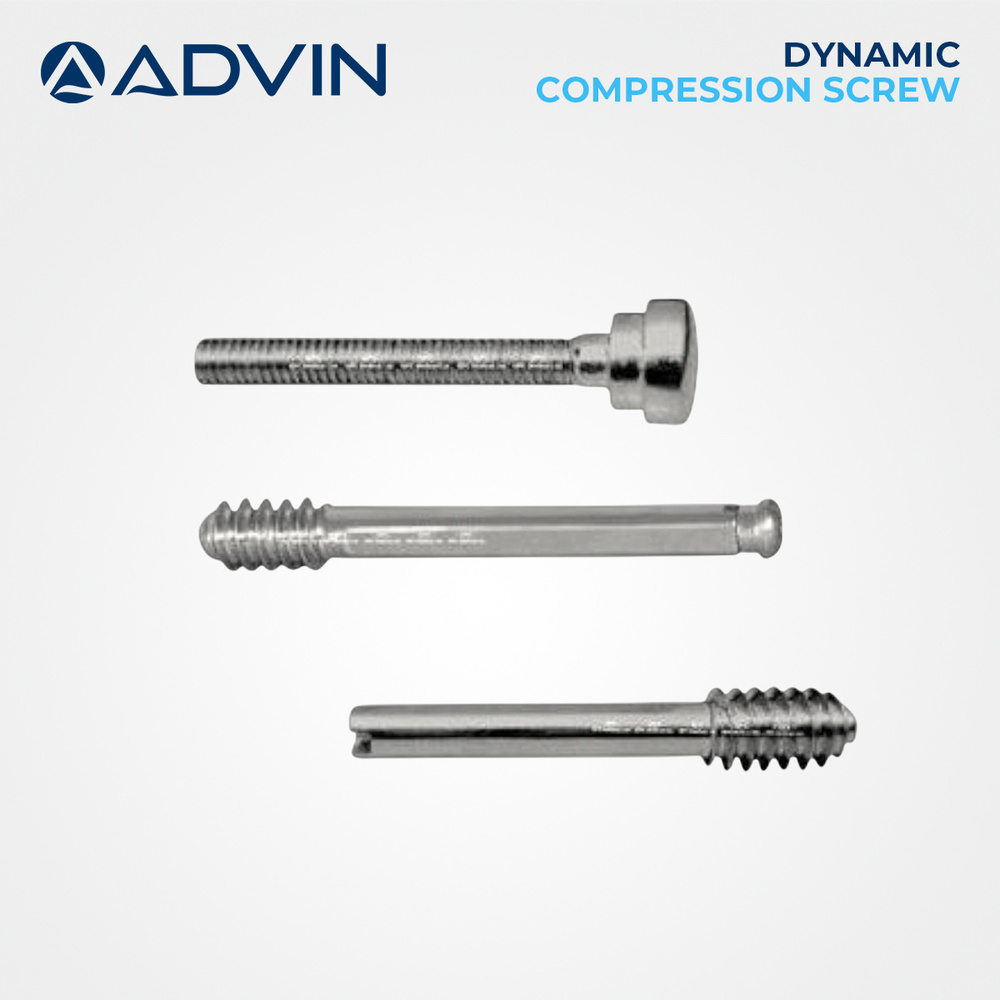
DHS Compression Screw (Dynamic Compression Screw) About
The DHS Compression Screw plays a crucial role in the dynamic hip screw system, designed to provide controlled compression and improved stability at the fracture site. When used with the DHS lag screw and side plate, it enhances fracture fixation by maintaining optimal bone contact. Advin Health Care manufactures this screw under strict quality standards, ensuring biocompatibility, mechanical strength, and consistent performance in trauma orthopedic procedures. The precision-engineered design supports accurate implantation, effective load transfer, and faster recovery for patients.
Advanced Features:
-
Provides additional compression with DHS implant system
-
Designed to enhance stability and fracture healing
-
Manufactured from high-quality stainless steel for durability and corrosion resistance
-
Ensures reliable fixation in trauma orthopedic surgeries
Optimized Fracture ManagementThe DHS Compression Screw ensures reliable fixation and dynamic compression for hip fractures. Its fine threading and self-tapping qualities facilitate efficient surgery and bone healing, helping restore mobility in affected patients. Precision machining provides stability and minimizes implant migration, offering surgeons a high-performance solution for complex orthopedic cases.
Superior Material and Sterilization QualityCrafted from stainless steel or titanium alloy, the DHS screw is corrosion-resistant and passivated for durability. Each screw is EO sterilized and double-packed for optimal sterility, ensuring safe implantation. Its polished surface finish permits smooth insertion while reducing tissue trauma, prioritizing patient safety and comfort.
Versatile Compatibility and Easy HandlingThe screw is compatible with standard dynamic hip screw plates and instruments, supporting seamless integration into existing surgical workflows. Lightweight and portable, it simplifies preparation and operation, with its manual operating nature requiring no external power sources. Available in various lengths, it meets diverse patient anatomical needs.
FAQs of DHS Compression Screw (Dynamic Compression Screw):
Q: How is the DHS Compression Screw used during orthopedic surgery?
A: The DHS Compression Screw is manually inserted into the proximal femur, typically in conjunction with a DHS plate, to stabilize hip fractures. Its design allows for self-tapping into bone, providing dynamic compression and facilitating proper alignment and fracture healing.
Q: What makes the DHS Compression Screw compatible with standard instruments and plates?
A: Designed to meet standardized orthopedic specifications, the DHS Compression Screw seamlessly aligns with conventional DHS plates and surgical instruments, ensuring straightforward integration into surgical procedures and supporting efficient workflow for surgeons.
Q: When should the DHS Compression Screw be used for fracture fixation?
A: This screw is intended for emergency or elective fixation of hip fractures in adult and elderly patients, specifically for proximal femur fractures where dynamic compression is required to promote stable bone healing.
Q: Where should the DHS Compression Screw be stored before use?
A: The screw should be stored unopened in a dry, clean environment, away from direct sunlight, to maintain sterility and optimal condition throughout its five-year shelf life.
Q: What benefits does the fine-pitch, partially threaded design offer?
A: The fine pitch and partial threading deliver controlled dynamic compression across the fracture site while enabling easy penetration and stable seating in bone tissue, which supports rapid and effective healing.
Q: Is the DHS Compression Screw single-use or reusable?
A: The DHS Compression Screw is strictly single-use and should not be reused. Each screw is sterile and double-packed to ensure maximum safety for a single implantation procedure.
Q: What materials are DHS Compression Screws manufactured from, and why?
A: DHS Compression Screws are made from stainless steel or titanium alloy, both known for their strength, biocompatibility, and corrosion resistance, which ensure the implants durability and performance within the body.

 Send Inquiry



 Send Inquiry

 Send Inquiry
 English
 Spanish
 French
 German
 Italian
 Chinese (Simplified)
 Japanese
 Korean
 Arabic
 Portuguese