Humerus Interlocking Nail About
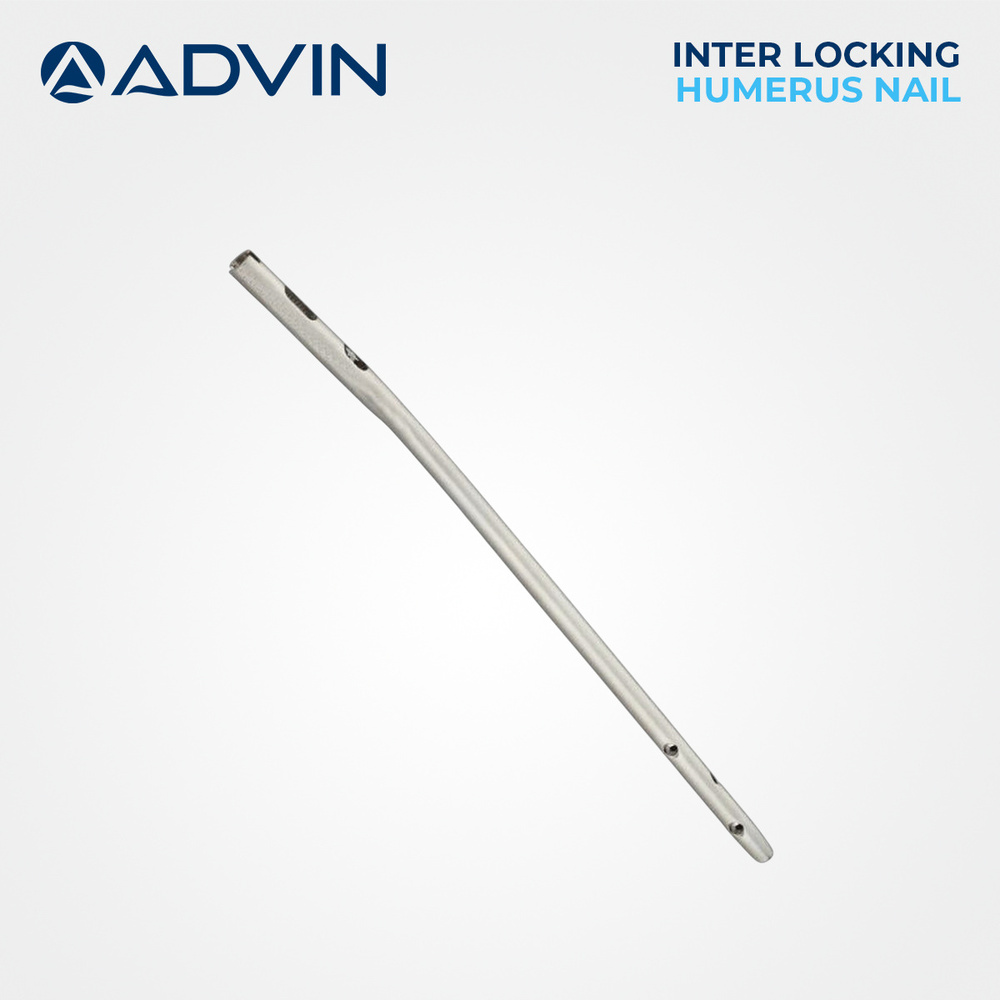
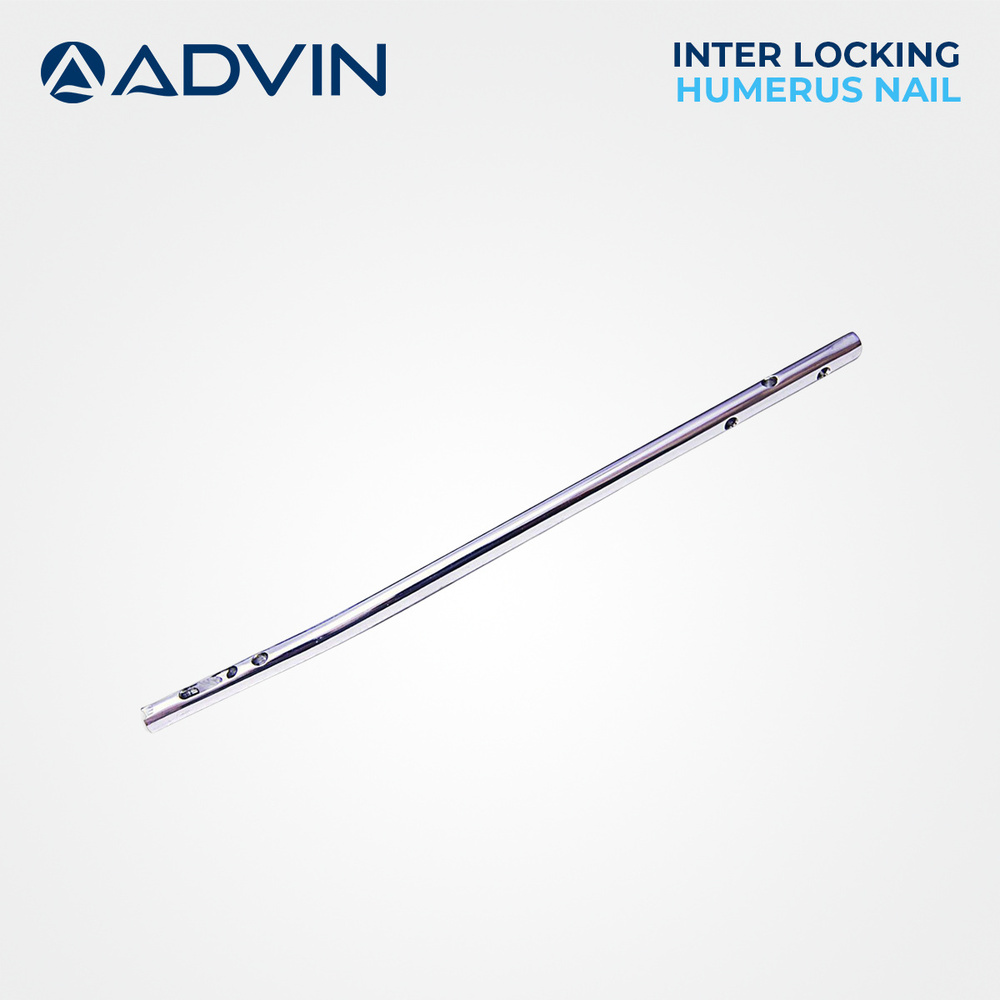
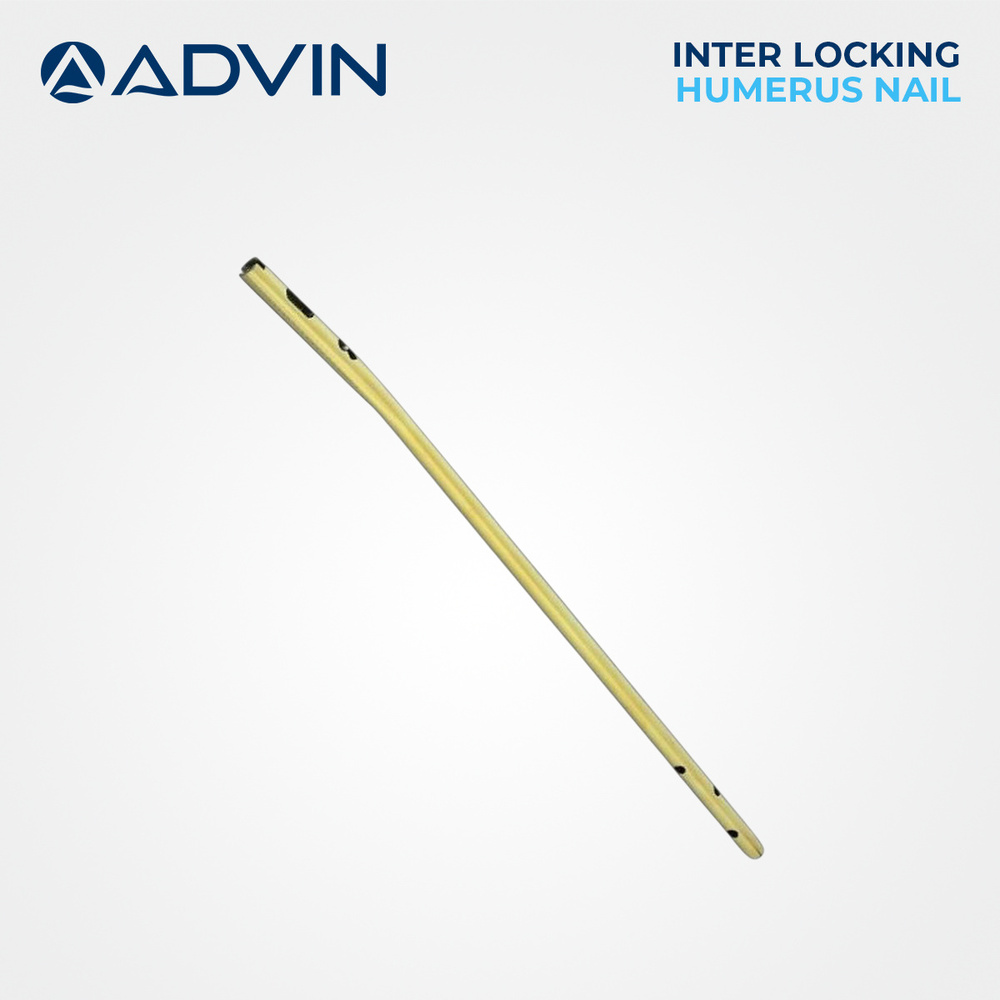
Humerus Interlocking Nails are widely used in orthopedic trauma surgeries to treat diaphyseal and select metaphyseal fractures of the humerus. Manufactured from high-quality surgical-grade stainless steel, they offer excellent strength, durability, and biocompatibility. Advin Health Care provides these nails to assist surgeons in achieving precise fracture reduction and stable fixation, minimizing the risk of malunion or non-union. The interlocking screw system at both proximal and distal ends ensures axial and rotational stability, making them suitable for complex, comminuted, or osteoporotic fractures. These nails enable early rehabilitation and functional recovery, improving outcomes in humeral fracture management.
Advanced Features:
-
High-strength surgical-grade stainless steel construction
-
Interlocking screws for axial and rotational stability
-
Anatomically designed for humeral shaft fractures
-
Effective in osteoporotic, comminuted, and long bone fractures
-
Supports early mobilization and faster post-operative recovery
Precision Stabilization for Humerus FracturesEngineered to address a range of humerus fracture patterns, this interlocking nail leverages proximal and distal locking options for dependable stabilization and alignment. Its precision design allows for anatomical fit, appropriate load-bearing, and improved healing, while the smooth, polished surface reduces soft tissue trauma during surgical intervention.
Biocompatible and Imaging-Friendly FeaturesManufactured from medical-grade stainless steel or titanium alloy, the nail offers biocompatibility and durability. The radiolucent end cap enhances intraoperative imaging and postoperative assessments, allowing for optimal placement verification without imaging artifacts.
Sterile and Ready for Immediate UseTo ensure patient safety and procedural efficiency, the humerus interlocking nail is delivered sterile in a blister or peel pack. Ready to use upon opening, it is designed for single-use application, minimizing infection risk and ensuring flawless performance directly out of the packaging.
FAQ's of Humerus Interlocking Nail:
Q: How is the Humerus Interlocking Nail used during surgery?
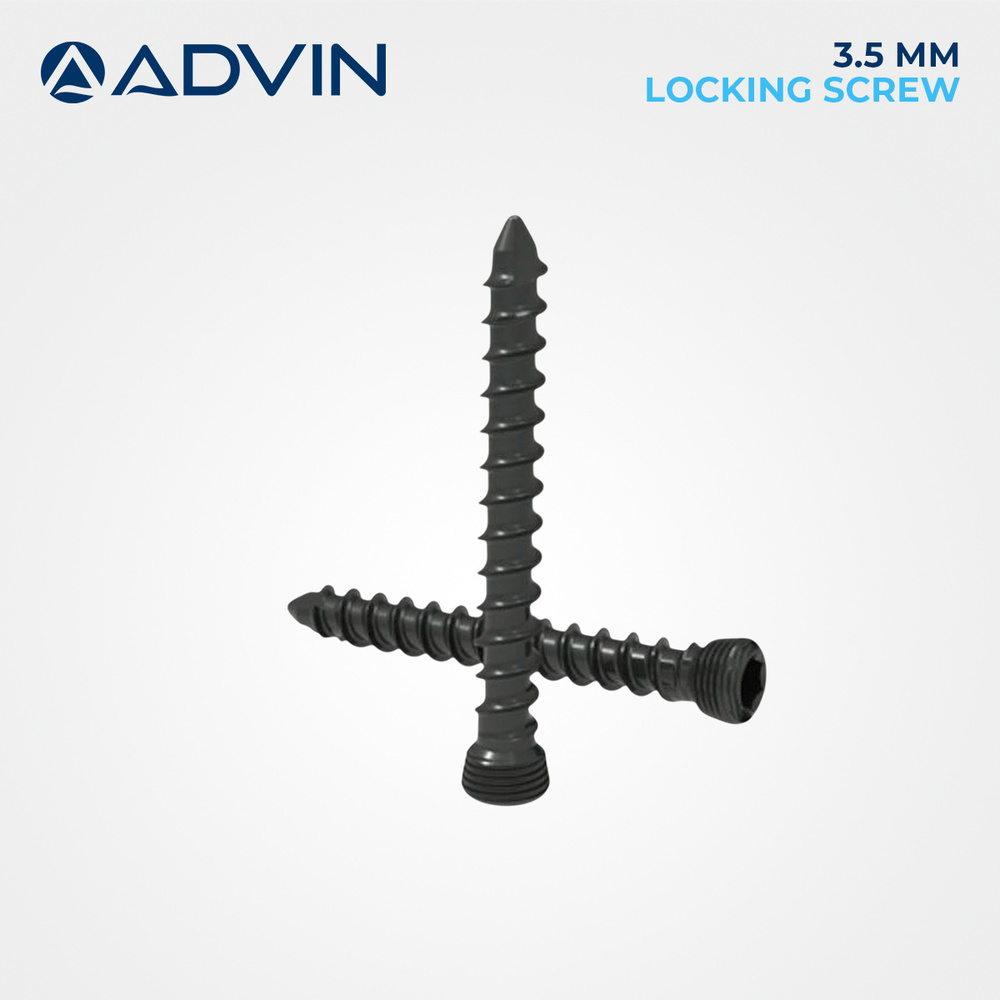
A: The humerus interlocking nail is inserted by an orthopedic surgeon into the humeral shaft to stabilize and align fractures. Using standard interlocking surgical instruments, the nail is guided into place after proper reduction of the fracture, with locking screws applied proximally and distally for secure fixation.
Q: What types of fractures are suitable for this nail?
A: This interlocking nail is indicated for humeral shaft fractures, segmental fractures, and pathologic fractures. It is designed to provide stable internal fixation for these fracture patterns, supporting optimal bone healing and patient recovery.
Q: When should this implant not be used?
A: The humerus interlocking nail is contraindicated in cases of active infection at the surgical site and for unstable bone fragments lacking adequate cortical bone support, as these conditions could compromise fixation and healing.
Q: Where is the Humerus Interlocking Nail manufactured and supplied from?
A: This nail is manufactured, exported, and supplied by orthopedic implant specialists in India, ensuring adherence to international quality standards for surgical implants.
Q: What are the key benefits of the radiolucent end cap?
A: The radiolucent (X-ray transparent) end cap enables clear imaging during and after surgery, providing excellent visibility of bone healing progress without interference from the implant hardware.
Q: How should the nail be stored before use?
A: To maintain sterility and product integrity, the nail should be stored in a cool, dry place in its original blister or peel pack until ready for use. Unopened packages help ensure a five-year shelf life.
Q: What makes this interlocking nail biocompatible and safe?
A: Constructed from medical-grade stainless steel or titanium alloy, the nail is corrosion-resistant and designed to integrate safely with human tissues, reducing the risk of adverse reactions while maintaining high structural strength.

 Send Inquiry



 Send Inquiry

 Send Inquiry
 English
 Spanish
 French
 German
 Italian
 Chinese (Simplified)
 Japanese
 Korean
 Arabic
 Portuguese